The whispers started in America’s surf community in the 1970s…
Quiet talk of a long crescent of pristine sand on Costa Rica’s remote northwestern coast—a place where warm water rolled in on perfect, consistent breaks, and where the lush jungle pressed right up against the tide line.
Getting there was an odyssey. Four or five hours on potholed roads. A journey through deep forest and over riverbeds. But those who made it found a true tropical paradise.
At first, only surfers and barefoot adventurers knew this secret. Then, in the early 1990s, a documentary crew from Hollywood arrived. And suddenly word was out.
Within years, this small community became the most iconic and sought-after beach town on Costa Rica’s Pacific coast. Today, wealthy folks from across the world spend millions to own here.
I’ve been scouting this coast for at least 16 years. Now—for the first time ever—I’ve secured an off-market deal here for members of my Real Estate Trend Alert (RETA) group. And our exclusive pricing is mind-blowing. More on that in a moment.
But first…here’s how Hollywood told the world about Costa Rica’s best beach town.
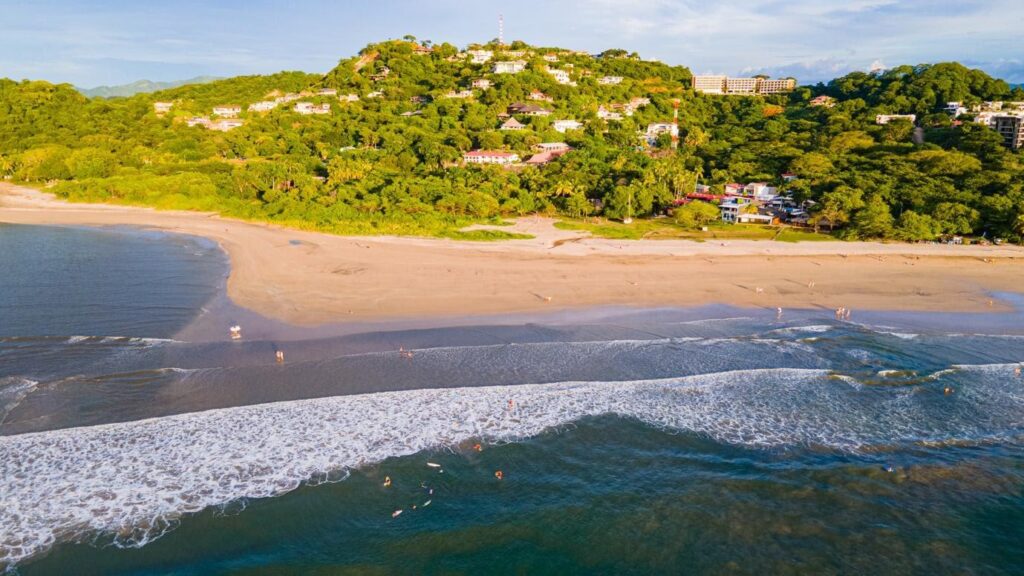
This destination was once a remote fishing village known only to surfers and hardy adventures. Today, it’s a vibrant, international beach town thanks to new roads and an international airport close by.
Endless Summers
When pioneering surfers and other adventurers started coming to Costa Rica four or five decades ago, the authorities took notice and set about building a tourism industry. This effort started with a slogan: “Costa Rica, it’s only natural.”
Beginning in the 1980s, authorities began been cranking out witty slogans and tourism campaigns like this to position Costa Rica as an eco-paradise. These efforts have been wildly successful. It helps that the positioning is entirely accurate.
Costa Rica is a natural paradise, a land of stunning beaches, verdant jungles, cloud forests, rushing rivers and pure, tumbling streams…
A vast Pacific coastline to the west is matched by a Caribbean coastline to the east. Wildlife is abundant and colorful…marine life is rich…
Foreign visitors want to come and experience all of this.
By the time Hollywood made a movie about Tamarindo in 1990s, word had already been slowly spreading about this town and the surrounding coast. But the movie was an inflection point…
In 1994, filmmaker Bruce Brown followed up his 1966 documentary with The Endless Summer II. Like the original almost three decades prior, the film chronicled a generation of surfers in search of the greatest waves and beach towns. Tamarindo was a key destination featured in the film.
The Endless Summer II helped push Tamarindo into the international spotlight. Though the real tourism acceleration came not with Hollywood, but with infrastructure…
Here’s a short video that gives you a feel for Tamarindo and Costa Rica’s wider Gold Coast. It shows the beaches, the landscapes, the walkable town, and the natural beauty that make this part of the world so special.
Access Opens
In the years around Hollywood’s arrival, a savvy group of hotel and real estate developers began to see the appeal of this endless-summer location.
The Four Seasons pumped more than $200 million into carving out a top-quality golf course, rooms and suites and hillside villas with private plunge pools…
Investors involved in the Four Seasons, as well as Hacienda Pinilla and Reserva Conchal resorts, were instrumental in persuading Delta to fly to the local airport in the regional capital, Liberia. They put up a $3 million guarantee to offset Delta’s losses if there weren’t enough passengers.
But Delta never had to tap into the fund.
The route was so popular that Continental and American Airlines followed with their own flights. Tourists could now get to this location quickly and easily for the first time.
In 2003, Liberia airport saw 50,000 passenger arrivals. In 2008, that number hit 420,000, more than an eight-fold increase. Last year, the number hit a record 1.9 million passengers. Along the way, this region earned the nickname, the Gold Coast.
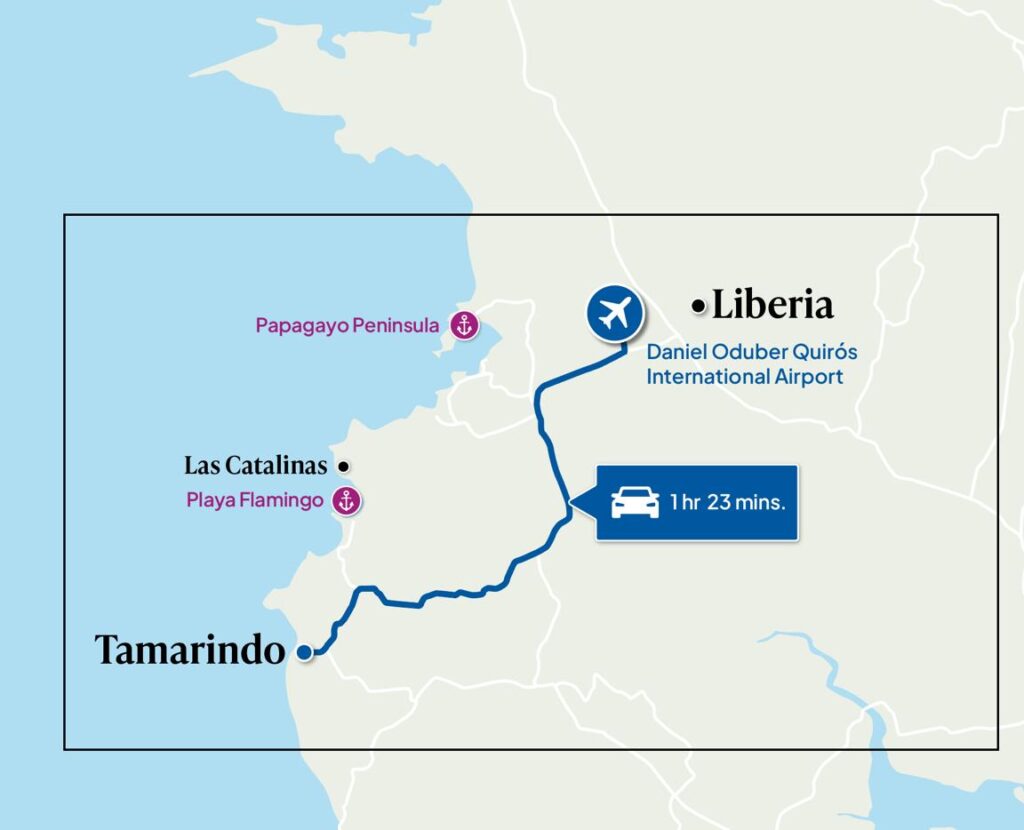
A “Path of Progress” has opened up the Gold Coast to millions of vacationers, retirees, remote-working families (a Path of Progress is anything that makes a place easier to get to or more desirable). Getting here is easy from the U.S. and Canada.
A Global Hot Spot
Accessibility changed everything for the Gold Coast and Tamarindo.
What had been a niche surf town was now just a few easy hours away for millions of North Americans.
Through the 2000s Tamarindo began to take shape as the unofficial capital of the Gold Coast. High-end hotels opened. Grocery stores, clinics, and international services arrived. Digital nomads began trickling in.
Surf schools became institutions. Boutique restaurants and bars created a walkable evening culture. Day-trippers from all over Guanacaste made Tamarindo their hub.
By the 2010s, Tamarindo had become a global name—the first place most visitors see in Costa Rica, the epicenter of surf culture, nightlife, yoga, fishing, and family travel. Its two-mile stretch of beach became one of the most photographed in the country.
Then another wave hit: remote workers, long-stay visitors, and high-net-worth families wanting lifestyle, walkability, reliable infrastructure.
Rental rates surged. Available real estate disappeared. Prices rose sharply.
Today, Tamarindo is the beating heart of the Gold Coast—the place where demand is most constant, year-round. Yet through all this growth, one thing didn’t change:
The geography…
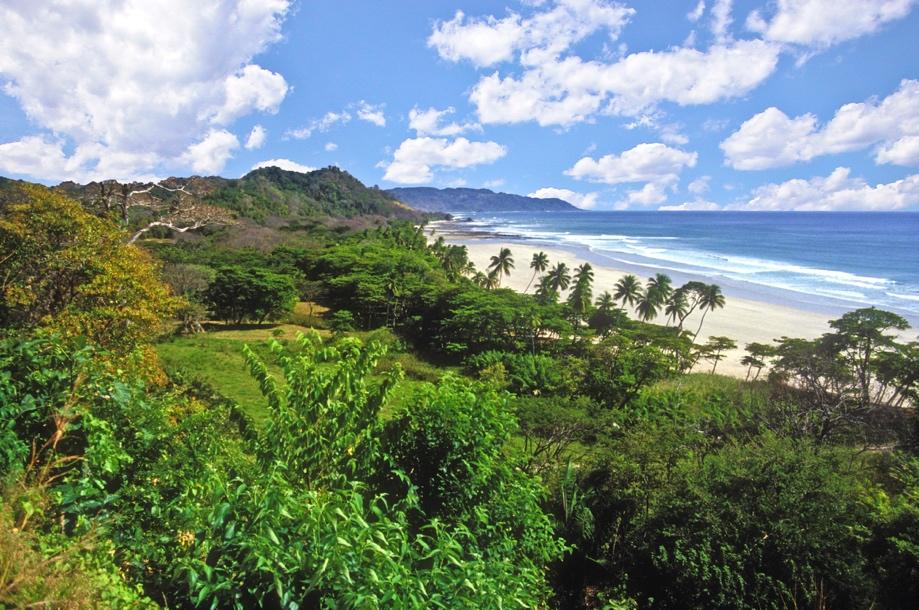
The thing about ocean views in Costa Rica is they’re never just a flat blue horizon. You get mountains, emerald forest, islands, rocky points, long sweeps of sand… a coastline that’s visually alive. Here, looking inland to the hills is every bit as fascinating as looking out to sea.
Careful Development
In many countries, the growth in popularity of a town like Tamarindo would have spawned overdevelopment. But not in Costa Rica…
Costa Rica is among the safest and most stable countries anywhere on my beat.
The army was abolished in 1948, and ever since, Costa Rica has been a beacon of stability for Americans and Europeans looking for a warm-weather escape. It’s widely regarded as a model country—respecting personal freedoms, welcoming foreign investment, and attracting major multinationals like Amazon, Pfizer, Hewlett-Packard, and Microsoft. It’s also one of the most environmentally progressive nations in the world.
Costa Rica has always been aware of the supreme importance of protecting its pristine landscapes—the foundation of its tourism sector.
As more people arrived, so did new restrictions on development—strict height limits near the waterfront, tight zoning, protected green belts, mangrove setbacks, and environmental controls.
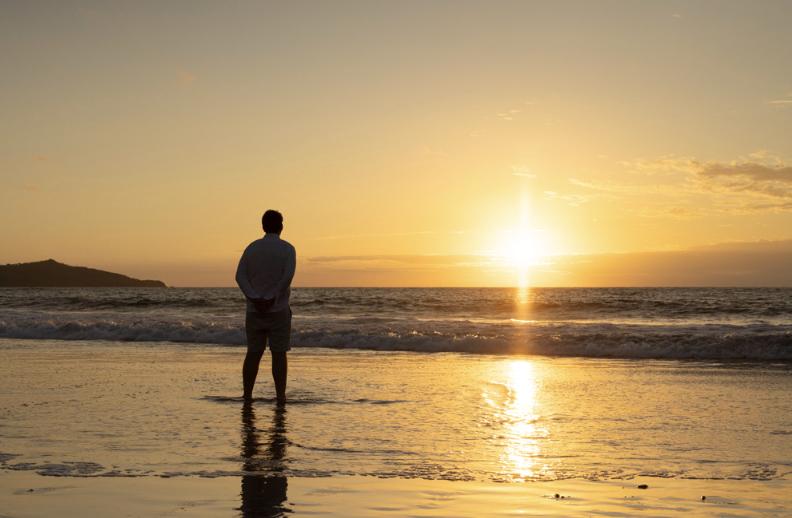
Sunsets are a big deal in this part of Costa Rica and here I am enjoying the show on one of my recent scouting trips.
These rules have protected the character of Tamarindo. The town is lively yet safe, international yet local, modern yet surrounded by protected natural corridors where howler monkeys still travel through the canopy.
But the rules have also made new, well-located development incredibly scarce.
The core of Tamarindo is small. The beach is finite.
Newer projects got pushed inland or onto hills farther from the walkable core. Ocean views became harder to achieve. Walking distance to the beach became harder to find. Almost all the buildable land near the water is long spoken for.
As demand runs headlong into limited supply all along this stretch of Pacific coast, premium real estate is becoming ever scarcer—and pricier.
Here are a few examples…
For a three-bed condo in a community called Tamarindo 360, you’ll pay over a million. Over $2 million for the penthouse.
In the same neighborhood is Air Homes, where you’ll find condos without ocean views in the region of $700,000.
These are the prices people are willing to pay today for the incredible lifestyle in this iconic beach town. Which makes the off-market deal I’ve negotiated here all the more remarkable.
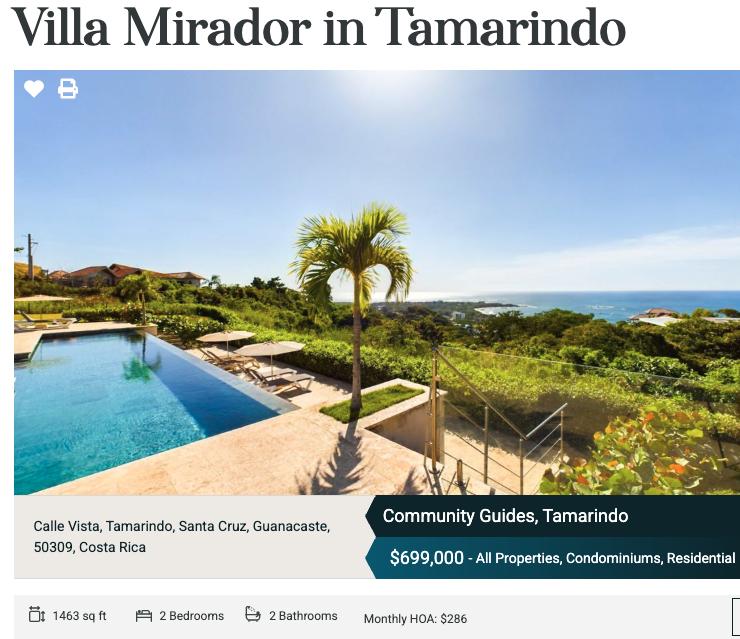
Here’s another example: At Villas Mirador buyers are getting great views and amenities but it’s not in the true golden circle of Tamarindo’s walkability. A two-bed condo of 1,463 square feet in Villa Mirador with ocean views is listing for $699,000.
As I say, top-quality communities in Tamarindo with stand-out amenities and ideal locations, walkable to the beach and town, are incredibly rare.
That’s why in the 17-year history of my RETA group, I’ve never found the right deal to bring to RETA members…until now.
I’m about to bring RETA an incredible off-market deal here…only our third ever deal on the Gold Coast and our first in Tamarindo.
This deal puts us in the perfect location, with stunning ocean views and within the true golden circle of walkability. We’ll own a stroll to the beach…a stroll to the town…and with outstanding amenities.
And yet, thanks to RETA’s group-buying power, and longstanding connections in the region, the exclusive RETA-only pricing is incredible—starting from just $392,400 ranging to just $612,800 for the penthouse.
This off-market pricing is a testament to the power of my RETA group.
And thanks to this exclusive pricing and the incredible moats on development here, I expect gigantic capital appreciation—gains of $307,600 three years after delivery.
And there’s income…
Premium condos like this rent like hotcakes here, and I expect—with just a modest occupancy—gross rental yields of 16.2%.
But there will be only 31 condos available to RETA members.
My full briefing on this deal drops exclusively to RETA members this Friday, December 5 at 1 p.m. ET.
If you’re a RETA member, stay tuned…you won’t want to miss this.
Not a RETA member? Learn how you can join here and get access to our off-market deals, including this one.
Wishing you good real estate investing,

P.S. Yesterday, I shared a video on my YouTube channel diving into Tamarindo and the four factors that make it so special. Check it out below and then share your thoughts and questions in the comments.
In this video, I tell you about Tamarindo, which I’ve ranked among my top five places in the world to buy real estate in 2026.