Happy holidays!
It’s that special time of year when we get to pause and think about all the things we’ve always dreamed of doing.
That’s why I wanted to share a special note with you today.
Real Estate Trend Alert (RETA) member and seasoned global investor Kim Iskyan is on an interesting journey, one that many of us probably dream of, and that’s buying or building his own house in France.
He’s still early in this journey…but what he’s learned already is hugely instructive for anyone who’s thought of doing this.
It shows first and foremost that this dream is very achievable…when you know the right strategies and approaches.
I hope you find Kim’s story inspirational for the year ahead.
Wishing you good real estate investing,

House-Hunting in France: What Worked, What Didn’t, and What We’d Do Again
By Kim Iskyan
Late last year my girlfriend Michelle and I decided to stop only talking about finding a place to live in France. And we decided to do something about it.
Why France? Where in France? And how in France?
Well, that’s what I’d like to share.
I’ll share how we initially wanted to own in Normandy…
How we ended up going house-hunting in The Dordogne (and got a crash course in some of the weird peculiarities of viewing properties in France)…
And how we ended up back where we started and are now building in Normandy…and are learning lots about the rules you need to follow when buying and building on land in France.
To be clear, we’re still early in the journey…just three visits deep into finding a place to live in France. But here’s what we’ve learned so far…
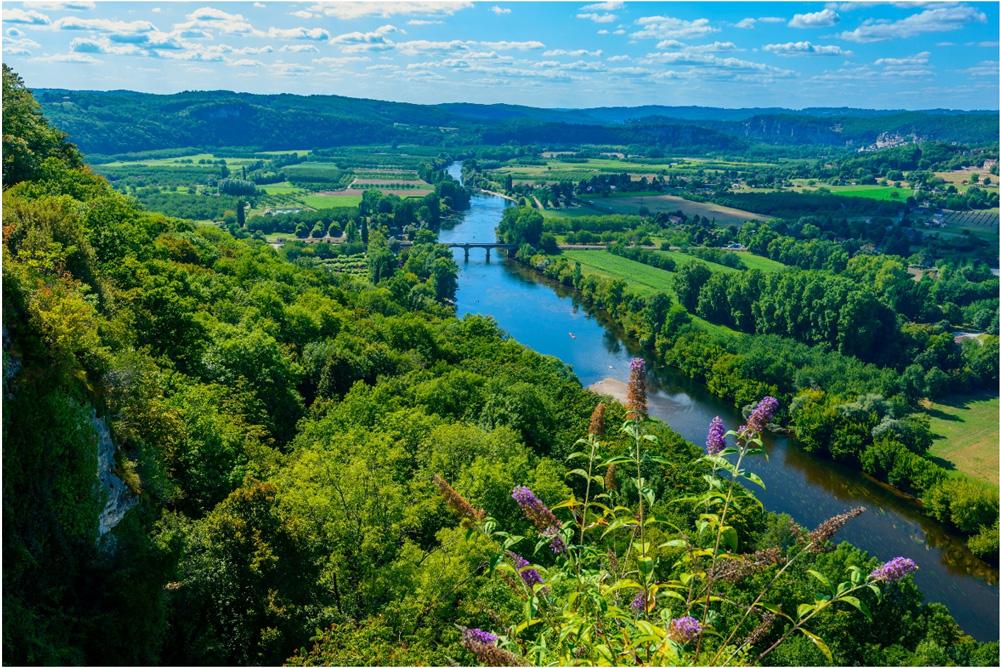
The Dordogne region of France is one of the places where Kim and Michelle considered buying a house.
Pour l’amor de France
Until recently, I didn’t think I’d ever want to live—to say nothing of own property—in France.
I spent my childhood in Spain…and France was the automotive equivalent of flyover country. The family Renault 4 labored through, rather than to, France during August family vacations. Our destination was always beyond in the Netherlands…or Austria…or Norway…
In contrast, Michelle spent summers in France as a teenager, a year in Paris in her 20s, and has been going back ever since. Most years she visits her friend from back then, Sophie, who lives in a small town on the northern coast of France, in Normandy.
Not long after we first met three years ago, I joined Michelle on one of her pilgrimages back to the land of vin and croissants. And I discovered that—contrary to my childhood prejudices—France (or is it me?) has changed…and that it’s actually kind of fantastic.
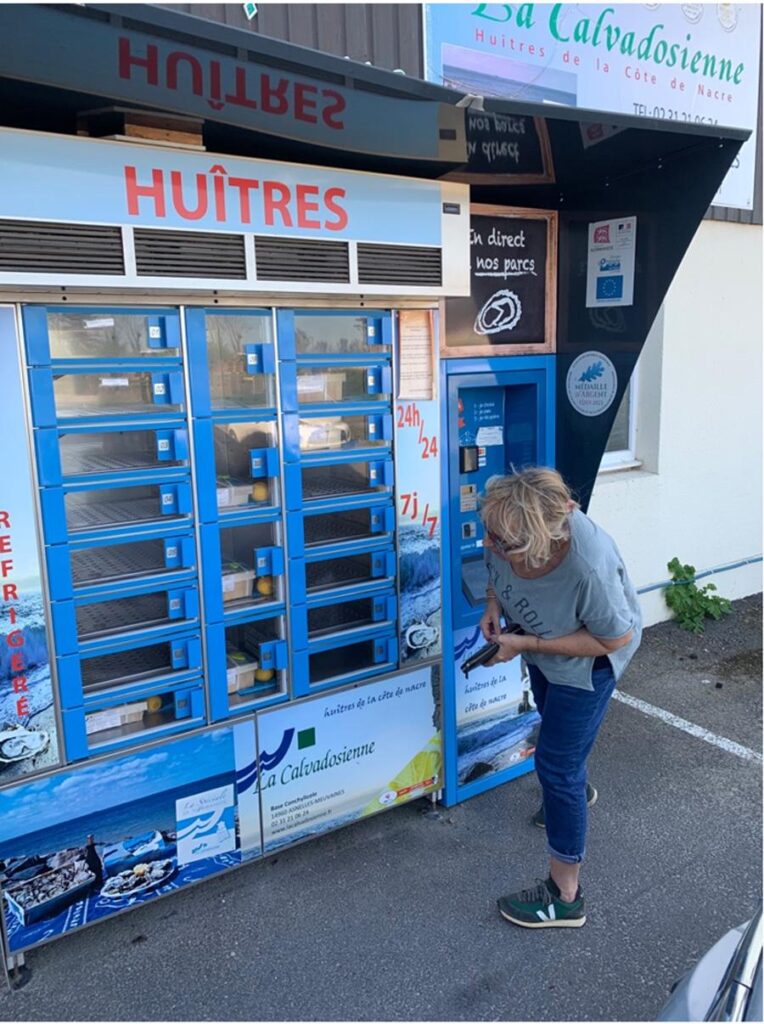
An oyster vending machine on the side of the road… only in France.
My later-in-life appreciation of the charm of France is partly a function of not having an anchor. Over the course of my life, I’ve lived in upwards of 30 houses or apartments, across nine countries and as many states in the U.S.
From that context, the history that oozes from every tiny town and old church and Van Gogh-like field in France is reassuring. The culture, the towns, the language, the wine, the countryside, the traditions: They’ve been here for centuries. That’s like a ballast to me.
That’s the romance of France, and the pull of it to me.
Casing Out The Dordogne
Michelle had long had her eye on an empty piece of land two plots down from where her friend Sophie lives, a five-minute walk from the English Channel in a small town in Normandy. It has a view of the sea and a sensational beach, and borders a field that’s adjacent to the British Normandy Memorial—suggesting that any additional development there is unlikely.
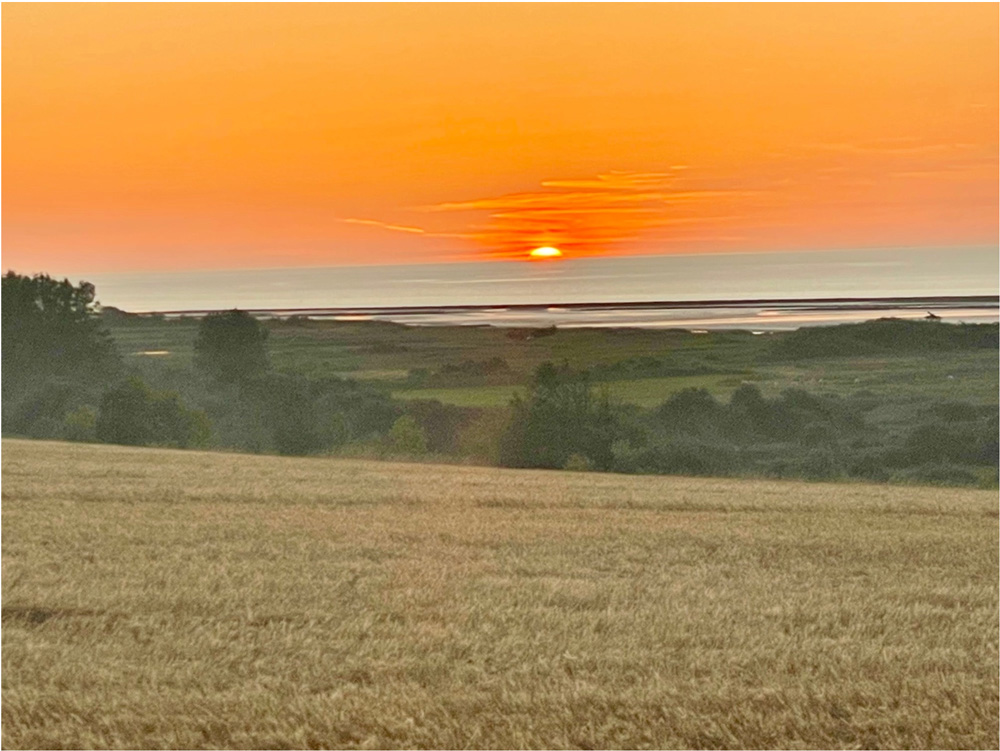
The view from the land…
But repeated indications of interest, via a neighbor, to the owner of the land had spurred nothing more than silence.
So for a plan B, Michelle and I decided to house hunt in the Dordogne region of France, which is around 250 miles north of the border with Spain, close to the coast and close to Bordeaux.
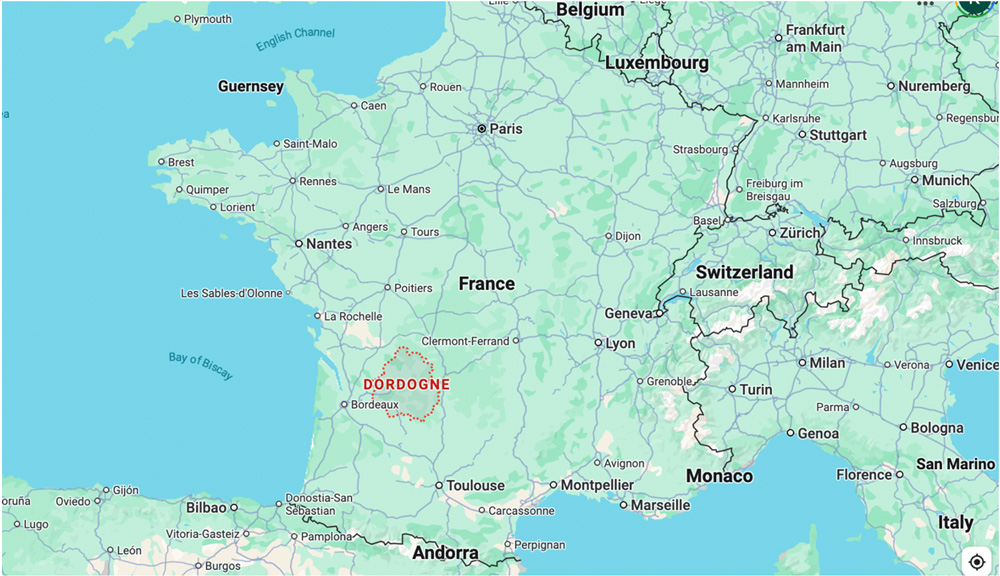
The Dordogne has a massive abundance of beautiful houses for sale.
Our choice of region wasn’t completely random. Michelle had been there a number of times, and spoke glowingly of it. And I vaguely recalled driving through a few towns in the area 40 or so years prior.
And there is a massive abundance of beautiful houses for sale in the Dordogne around our ballpark budget of €400,000.
We found that a handful of websites—including Beaux Villages, A Place in the Sun, and Green Acres—had more of the sorts of properties that we liked as well as the best search functionality.
After whittling down a long list to around a dozen houses, we got in touch with a real estate agent that was listed as the contact point for three of our preferred properties. We set up a time to speak with Molly (if you don’t use WhatsApp, start soon—because outside of the U.S., it’s how the world communicates). Her English was very good—not surprising, considering that she’s British, like many of the realtors we came across.
Molly subsequently put us in touch with the agents representing a few of the other houses we were interested in. We soon bumped into the limits of what you can do over the phone, though.
That House in The Dordogne
Michelle and I booked a flight to Paris, connecting to Bordeaux, and then rented a car to go to Bergerac, a delightful town of 27,000 people about 75 miles east in the Dordogne region. Bergerac has crooked cobblestone streets, a fantastic Saturday morning market, cozy little restaurants and multiple town squares, and a picturesque river (that’s the Dordogne, naturally) running through it.
We arranged to see four houses on the first full day in town, three the next, and five the following day. Since different brokers were responsible for different properties, we’d meet the relevant realtor at the property (renting a car is critical—don’t expect to be driven around).
Before we could visit a property—this is a peculiarity of house hunting in France—we had to sign a bon de visite, or viewing agreement, with the real estate agency. It was to confirm which houses the agency was showing us, and to establish that we could only negotiate and buy those properties through them.
Over the three days of viewing, we saw a handful of houses that we liked, including this one, which was big and way off in the country, and had a tenant in a separate apartment that was part of the package…
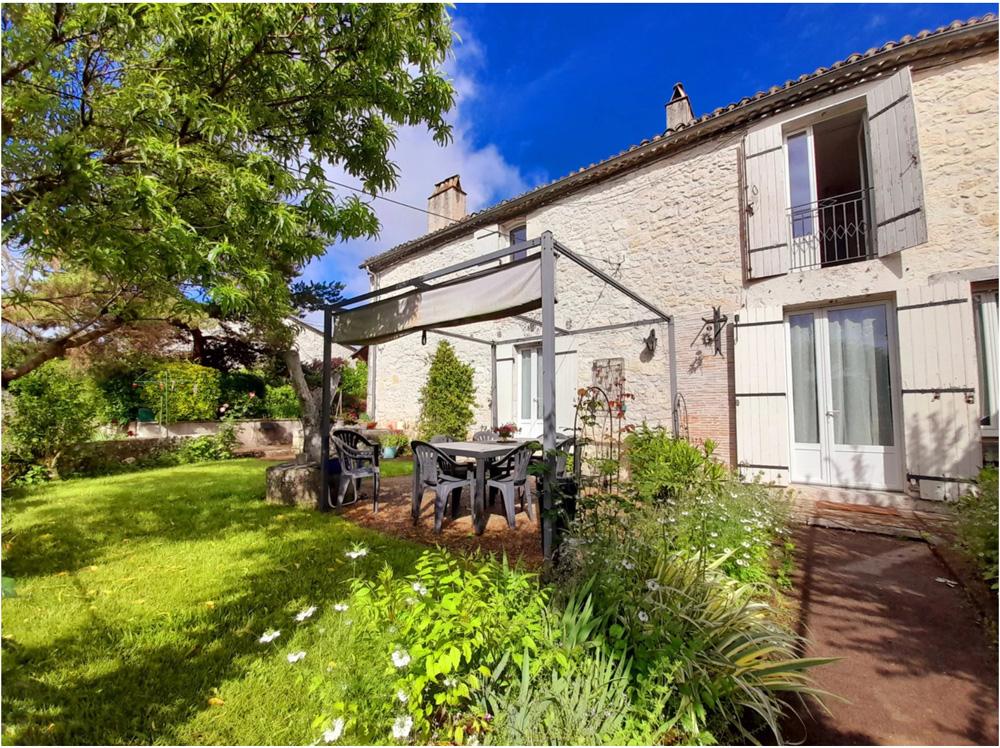
One that impressed us…this five-bed, three-bed home is in the Issigeac area of the Dordogne. It’s listed for €450,500. Listing here.
And this property, which featured two life-sized red statues of a scantily clad man (presumably they weren’t part of the purchase price) and fantastic views that are weirdly underplayed on the website.
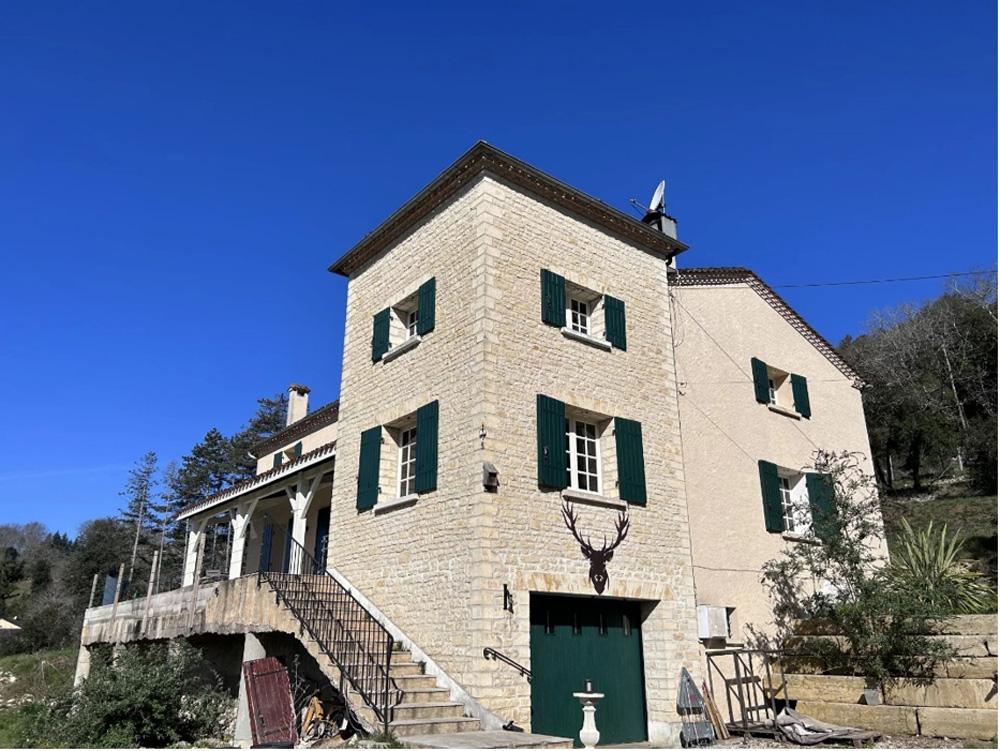
Also boasting five bedrooms, this three-story stone house is 20 minutes from Bergerac. It’s listed for €443,617. See the full listing here.
This house is 10 steps from the Dordogne and looked promising online—but in the flesh had all the character of a limp noodle, partly because it was designed exclusively to be rented out, rather than lived in.
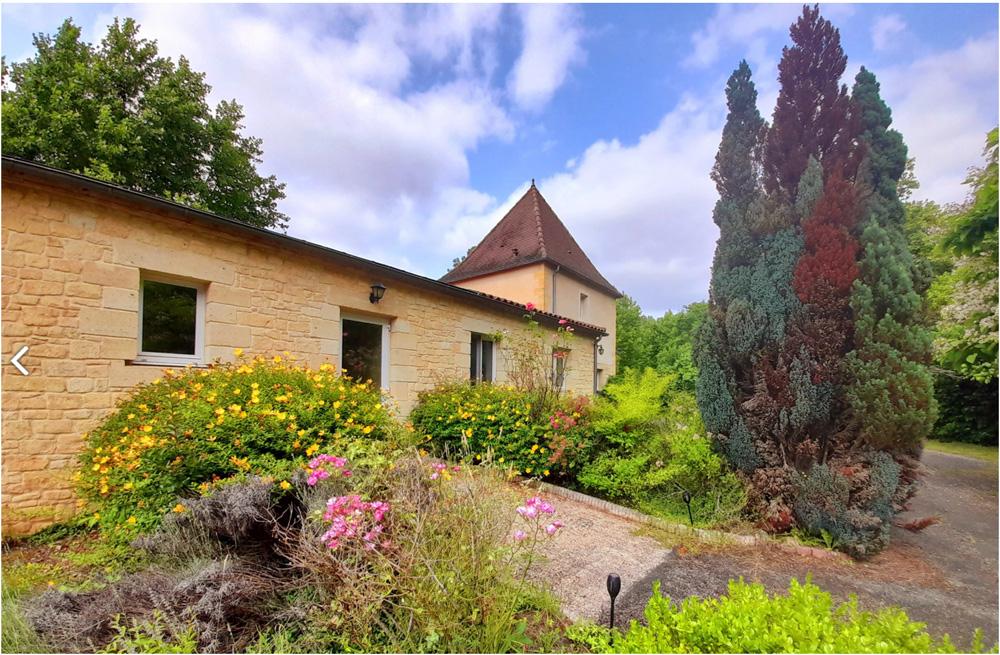
This home is attractive though the interior was a bit bland and uninspiring for our tastes. It’s five minutes’ drive from the village of Lalinde. It’s listed for €450,000.
As it happens, these houses are still available for sale (we saw them in February).
One reason: the house market—in the Dordogne and elsewhere in France—moves at the speed of cold brie. It’s not at all unusual for a property to be on the market for many months, if not years—and, unlike most markets in the U.S., there’s no stigma associated with that.
Another reason they’re still on the market: Michelle and I didn’t wind up buying a house in the Dordogne.
Buying (and Building) in Normandy
On the evening of our last day in Bergerac, Michelle’s old friend Sophie called from Normandy to tell her that her one-plot-down neighbor was ready to sell his land.
It wasn’t the most convenient timing—how about deciding before we’d gone to France to look for a house, buddy?—though it could have been a lot worse, too (say, after we’d agreed to buy one of the imperfect properties I mentioned above).
So, empty handed, we left France, and started the process of buying land and—eventually—building a house on it.
The first step was a five-page property buyer questionnaire about the purchase, her intentions for the land, and other details.
Next was a 38-page promissory sale agreement, detailing key French real estate transaction elements: property descriptions, suspensive conditions (including building permit requirements), easements, mortgage guarantees, and detailed provisions about the parties’ rights and obligations.
In order to buy the land, Michelle has to say what she’s going to use it for. And not just “to build a house”—but a concrete plan, including an architectural design for the house. Michelle is using the contractor who built Sophie’s house, which is (so far) making it all much easier. But not necessarily faster.
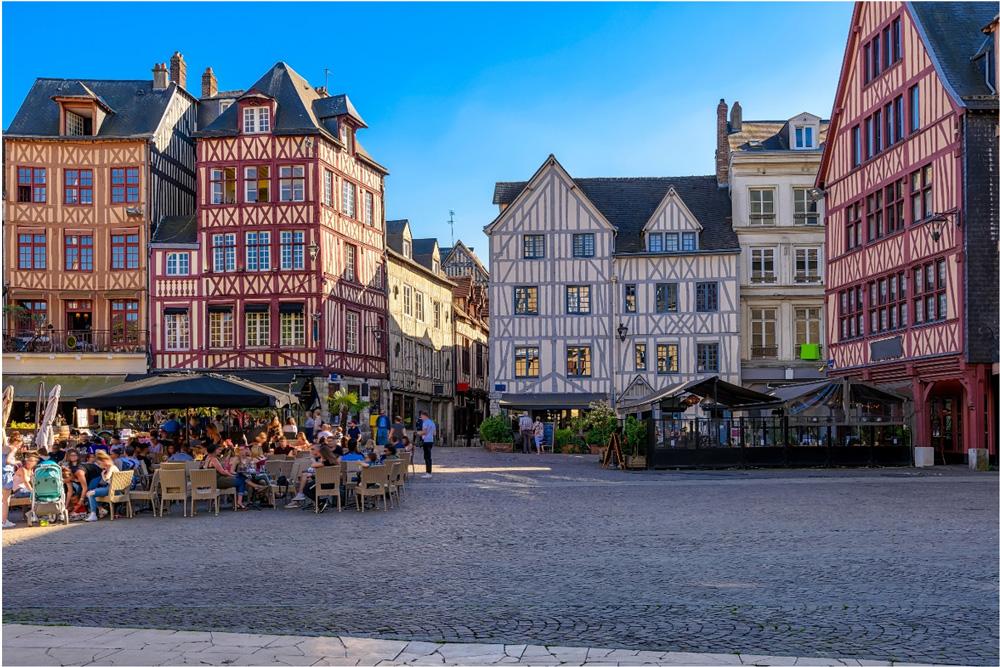
Normandy, France. The real estate market moves slowly here.
Just getting to the point where she could put a 10% down payment on the land took close to three months, between the exchange of paperwork (and our translating the document in Claude… thank you AI) and a discussion with the notaire, who’s a public official with the authority to authenticate legal documents and contracts. Then, one of the sellers of the land—it was owned by a couple—was out of town, and thus wasn’t able to sign the sales document (apparently the mail, or DocuSign, wasn’t an option).
Who holds responsibility for the next step has often been unclear. Nudges from us result in a “it’s in process” kind of reply… in other words, welcome to France, you impatient Americans. All of August and most of September was a symphony of crickets, since everyone was on vacation.
Then we (finally) received an actual concrete proposal from the developer—down to the number of outlets in the master bedroom and the kind of tile in the upstairs bedroom—eight months after we first got going (and…Michelle still doesn’t own the land).
And now that we’re here, money will—presumably—change hands for the land, and construction will start. Michelle will need to make a lot of difficult decisions about everything from the color of the walls, to the brand of the toilets, to the backsplash tile design… and only so much can be done remotely.
And according to the contract—though the penalty of noncompliance is (also) unclear—the house needs to be finished within two years of the contract being signed.
The Economics of Our House-To-Be in France
The plot of land totals 1,245 square meters (that’s about 0.3 acres)—for a price of around €120 per square meter (around €11 per square foot). That’s far from cheap. But it’s in an established neighborhood, has a fantastic view, and is close to Sophie—which makes the land invaluable.
The developer initially floated an approximate construction cost of Michelle’s Normandy house, of around 150 square meters (including a big living room, and three bedrooms over two floors) of around €2,000 per square meter.
But the final proposal from the developer—after add-ons and VAT (and a my-kid-needs-braces surcharge…)—is closer to €2,800 per square meter (€260 per square foot). And: That’s with a shell of a kitchen, and without the inevitable oops-forgot-that additions (oh, you wanted heat?). Any landscaping is additional, too.
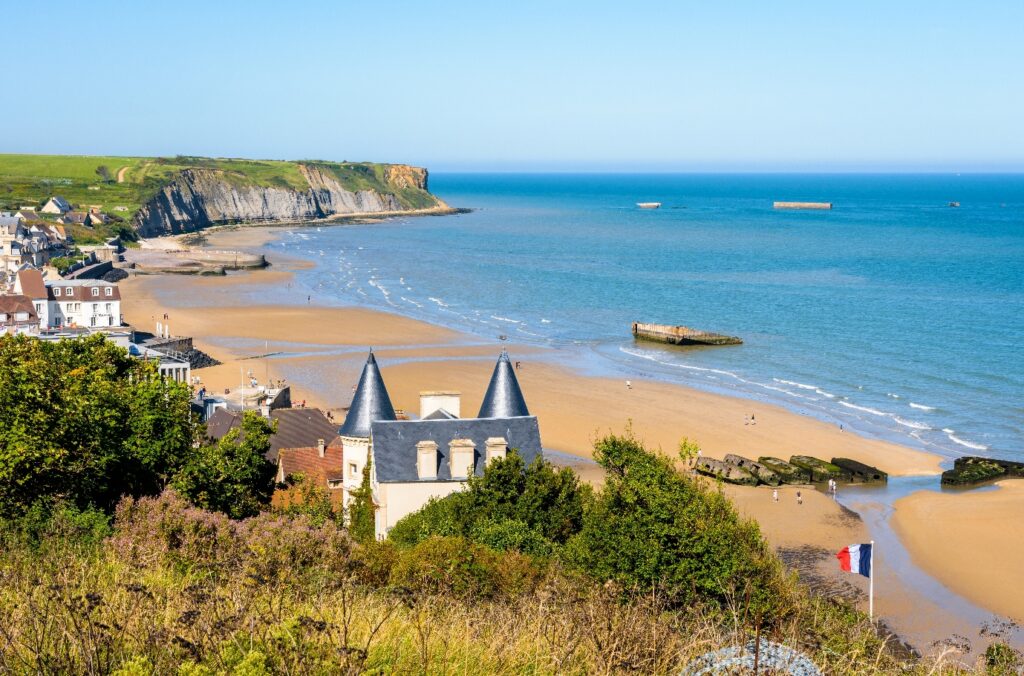
The beaches of Normandy are stunning and full of history, which was one of the region’s draws for Kim and Michelle.
The thing is, this plot of land isn’t any just any square of earth and rocks. It’s close to Sophie, for one. It has a fantastic view of the ocean—in a uniquely historical area.
We’re also hoping to rent the house when we’re not there, probably as an Airbnb. Some back-of-the-envelope calculations suggest a yield in the low- to mid-single digits, depending on the kind of occupancy we’re able to get.
Is it a great investment? From a financial perspective, probably not. But from a lifestyle and quality of life angle? Fingers crossed, priceless.
RONAN SAYS: As a pure investment…a way to make money…no deal in France has ever stacked up to me. But…boy…have I spent countless hours drooling over dream French properties. Many come with extremely affordable sticker prices and ooze class.
Southwest France came close to the top of my list before I moved to Portugal five years ago. Then I ruthlessly profiled myself…and Portugal won out primarily because of tax benefits for me of moving to Portugal and the weather in Portugal suits me better. Spring starts much, much earlier in Portugal and beautiful fall weather can extend right into November. Not in France…but the big point here—and one Kim has managed to nail—is you should ruthlessly profile yourself and understand exactly what you want before buying overseas.