I imagine you’ve been watching the same newsfeeds I have in the last week on Venezuela.
I don’t know what the future holds for the country. And this is not the moment for conclusions. But what I can say is that Venezuela is not new territory for me….
I’ve long had a special interest in crisis-ridden Venezuela because the country has enormous potential under the right conditions. That’s why my Real Estate Trend Alert (RETA) team and I have spent years researching destinations there, building local contacts, and reviewing real estate conditions during periods when Venezuela received little or no international attention.
Today, I’ll share my thoughts on this fascinating country. Because if you were able to buy at the right moment here, it could be the world’s best crisis play…
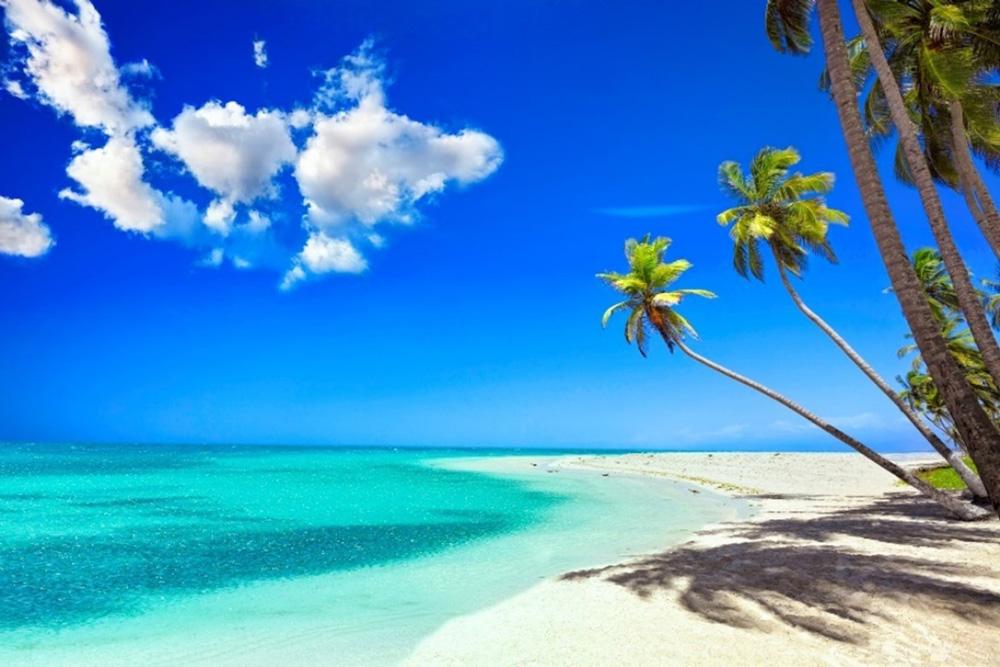
Venezuela is home to some of the most stunning beaches on the Caribbean. If the country could achieve long-term stability, the opportunity here would be incredible…
RETA was Born in a Time of Crisis
I’m an international real estate investor and scout. One of the few who do this full-time. Perhaps the only one. And I’ve now done it for more than two decades.
I founded RETA in 2008, while the world was gripped by the turmoil of the global financial crisis. But northeast Brazil was on a tear thanks to factors like a booming commodities market. And I and a small group of like-minded folks were killing it in the real estate market there.
This experience cemented for me a fact that’s become the core mantra of my RETA club: If you’re willing to look everywhere, there’s always opportunity somewhere.
And opportunity is always shifting. That’s why my team of scouts and I are constantly putting boots on the ground around the world…watching dozens of places…tracking huge macro transformations…talking to insiders with deep local knowledge.
While some destinations are (for the time being) played out, others are always emerging.
Venezuela is a place that has never left my radar…
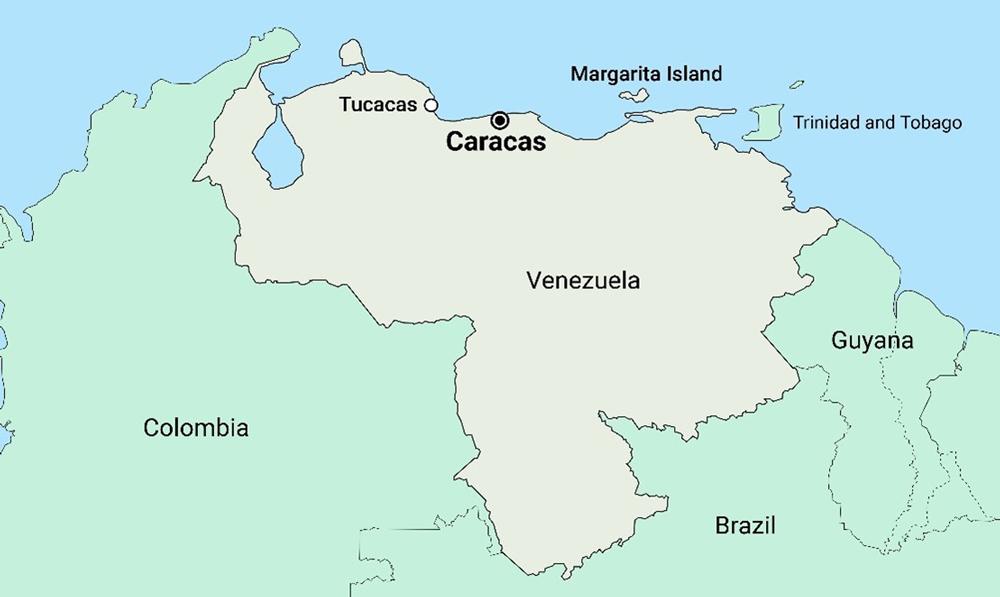
Venezuela is rich in natural resources and was once one of wealthiest countries in the world…
Why I’m Watching Venezuela
Venezuela should be one of the world’s wealthiest nations.
It has the largest known oil reserves on the planet, rich agricultural land, incredible natural wonders like the tallest waterfall in the world, and glorious Caribbean islands perfect for attracting tourists.
In 1950, when the rest of the world was struggling to recover from World War II, Venezuela was the fourth-richest country on earth.
By the early 1960s, Venezuela was producing more than 10% of the world’s oil and had a per capita GDP bigger than that of Brazil—and not far behind the U.S.
In the 1970s and 1980s, Venezuela sought to diversify its economy away from just oil. One of the focus areas was tourism.
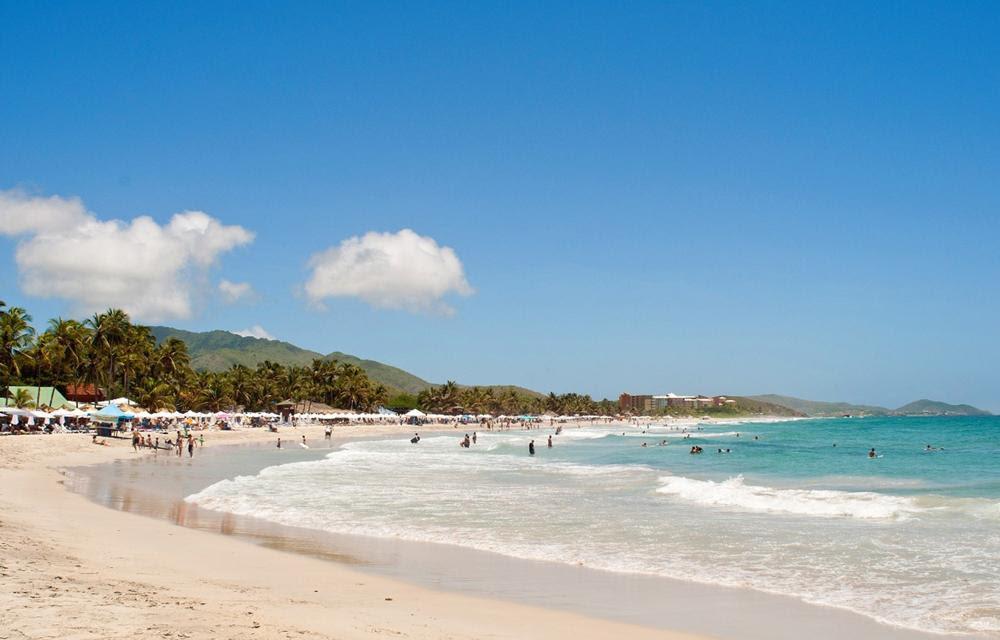
This beautiful country used its natural resources to attract millions of international visitors. Its greatest success was with Margarita Island, a stunning Caribbean island dotted with incredible beaches that became a popular cruise ship destination.
But the tourism sector began to unravel, along with the rest of the economy, when socialist president, Hugo Chávez, came to power in 1999.
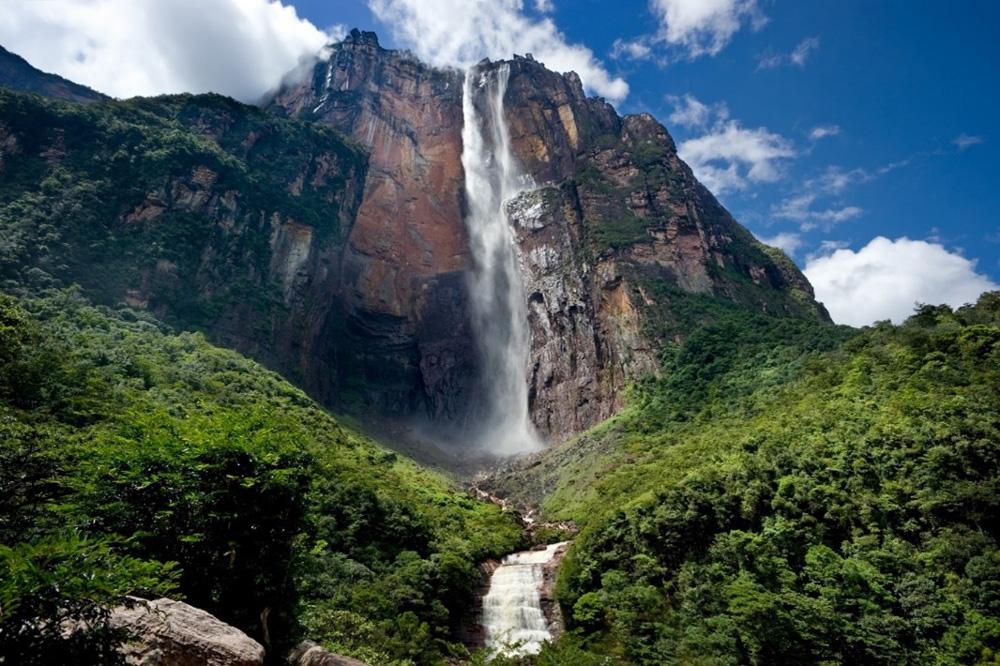
Venezuela is filled with sites of incredible natural beauty including Angel Falls, the world’s tallest uninterrupted waterfall.
What Went Wrong in Venezuela
Chávez started a campaign to nationalize huge swathes of the economy, including foreign-owned oil fields and tourism assets like hotels. The chaos caused by these policies eventually led to an economic collapse, and as the situation deteriorated, foreign tourists stayed away.
Over the past decade, the economic turmoil in Venezuela grew particularly acute.
Corruption has long been a major problem there. But under Chávez and his successor—Nicolás Maduro—fraud and misuse of state funds reached unprecedented levels.
Corrupt officials have siphoned tens of billions out of PDVSA, the state-run oil company.
As PDVSA was allowed to atrophy and other sectors like tourism were nationalized by corrupt, incompetent officials, a full-blown economic crisis became inevitable. The situation just needed a spark…
This happened in 2013, when global oil prices plummeted.
By this point, Venezuela was totally reliant on shrinking oil production for revenues. When the price fell, the country sunk into a deep and devastating recession that lasted for seven years.
Food became scarce. People starved as inflation skyrocketed. In the decade from 2012 and 2022, consumer price inflation in Venezuela averaged more than 9,000%. For many, the situation became impossible. Between 2015 and 2024, around 7.7 million people fled, many to neighboring Colombia.
It’s a sad tale—a prime example of how government corruption and terrible economic ideas can squander even the most incredible natural advantages.
But by the same token, there’s always the potential for the situation to turn around. And this reversal in economic fortunes could happen very quickly in Venezuela given the country’s immense tourism potential and vast mineral wealth.
This is why I’ve had Venezuela on my radar for some time as a possible crisis play…
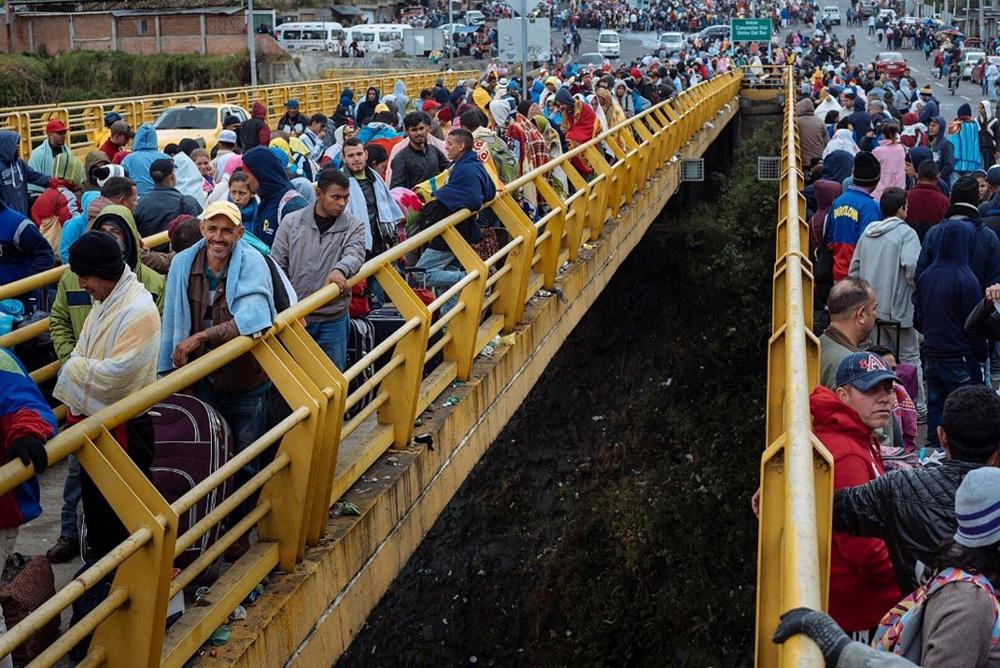
Venezuelan migrants wait to cross a bridge into Ecuador. Millions of people have fled Venezuela as the economy unraveled.
The Power of Crisis Investing
Crisis investing is one of the most powerful ways to profit as an investor. Often you’ll hear people describe this strategy with an old quote attributed to the 19th century British financier Nathan Rothschild, “Buy when there’s blood in the streets.”
A crisis is a time to snap up an asset cheaply. Then when the crisis recedes, and the true value is recognized, you have an asset that’s worth many times more than you paid for it.
I’ve previously brought some incredible crisis plays to my RETA group. In the wake of the 2007-2009 global financial and housing crisis, I identified fire-sale opportunities in Ireland and Spain, two of the most badly impacted countries. These were double-your-money deals. RETA members who followed those plays are sitting on gains of €102,100…€125,000…even €191,000 or more. (Details on these below.)
To see uplifts like these, though, you have to find the right crisis. Not every crisis is an opportunity.
To find opportunity in a crisis, you need to see a clear path to recovery.
So what about Venezuela? Is there a clear path to recovery?
The answer is…not yet. As recent events have shown, the situation there is fluid. What comes next is unclear.
But while it’s not time to act, it is time to prepare. I’ve been getting ready, laying the ground by cultivating contacts and gathering research. And a contact on the ground has already checked out the island I’m especially interested in: Isla Margarita.

Set in the Caribbean Sea off the coast of Venezuela, Margarita Island is home to scores of breathtaking beaches. This was once a tourism hot spot. And under the right conditions, it could be again…
The “Pearl of the Caribbean”
Isla Margarita is the largest island in the state of Nueva Esparta, a chain of roughly 70 islands scattered off Venezuela’s coast. In the 1930s, jewel dealers from Paris and Istanbul filled the guesthouses of its main city, Porlamar, each October as islanders turned to pearl fishing. By the 1970s, the island had become a major international tourist destination.
It has around 70 beaches, including some of Venezuela’s best. It’s also home to the city of Pampatar, known for its vibrant nightlife, and Playa El Yaque, one of the world’s top destinations for kitesurfing and windsurfing, with ideal wind conditions virtually year-round.
At one time, this island was attracting more than 3 million visitors per year. In 2022, only around 11,000 tourists visited the island, according to the Woodrow Wilson Center.
Since the collapse of the tourism industry, property prices have fallen to shockingly low valuations on Margarita.
You can own a condo here for only $15,000…
Though crucially, the tourist infrastructure remains—resorts, port terminals, and an international airport.
If conditions were to stabilize over time, I expect tourism demand would return—and today’s real estate prices would skyrocket.
Look across the Caribbean and you’ll find that a beachfront condo under $500,000 is relatively rare. Under $250,000 is extremely rare. $15,000 is, quite simply, absurd.
That’s why I continue to watch Isla Margarita closely.
One of my contacts in Venezuela is Canadian RETA member Jean Marc De Villiers. He arrived in the country in the mid-2010s, in the midst of the economic turmoil.
I asked him to go and see the market in Isla Margarita for himself. He did so in late 2024.
Below is his on-the-ground video report.
Jean-Marc de Villiers, a RETA member and real estate investor, shares a boots-on-the-ground update from Margarita Island during a scouting trip he took there in late 2024. Click to view…
My team and I are now arranging a follow-up scouting trip in the near future.
What To Do Now
At the moment, I’m watching to see how Venezuela looks when the dust settles. And that will take time.
Down the line, one of the key factors to watch in Venezuela that could signify a recovery is the flow of the country’s professional classes.
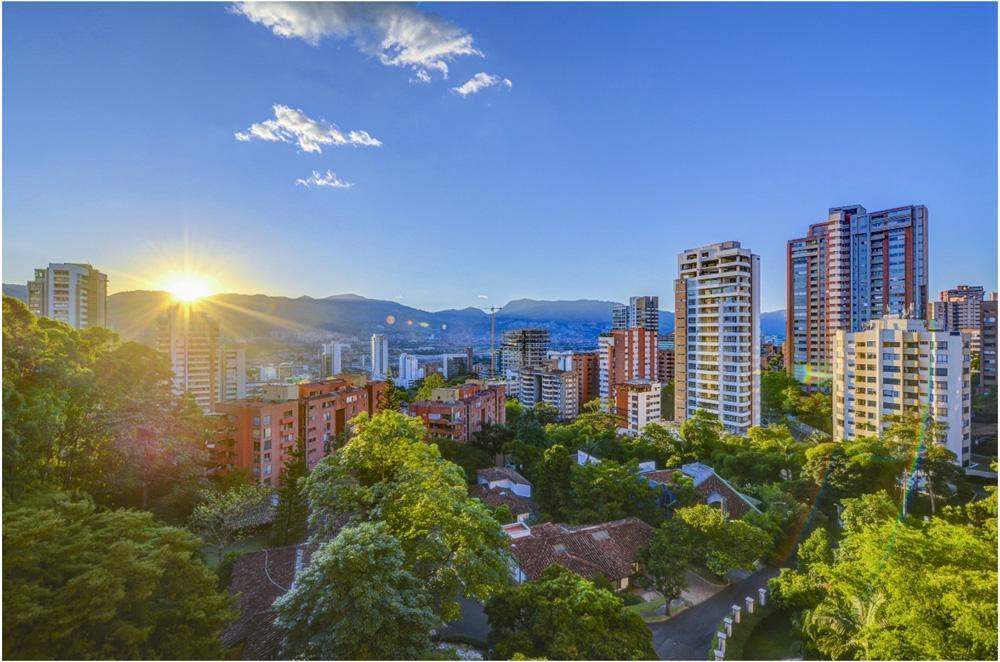
Venezuela has a well-educated and well-regarded workforce. Its professional workers were the first to leave when the crisis began, moving to places like Bogota, Panama City, Miami, and Madrid. And many of them brought their wealth with them in the form of dollars.
If things showed signs of permanent improvement, some would move back, bringing their purchasing power with them, thereby pushing up real estate prices. They haven’t returned in big numbers yet, however.
The time is not right to act in Venezuela. But that day may yet come.
I’m watching the situation closely…
Wishing you good real estate investing,

P.S. Some details on our RETA crisis investing track record…
Seventeen years ago, Ireland was in turmoil. The country was one of the most badly impacted by the global financial and housing crisis. In 2009, Irish banks collapsed in spectacular fashion.
I witnessed the drama from the streets of the Irish capital. But it wasn’t until 2011 that I began making my recommendations there. It was only then, three years after the crisis, that I recognized the trigger event that would allow the recovery to begin…
This trigger was when non-Irish banks exited and offloaded real estate in fire-sale auctions. This caused prices to plummet, but it also forced sellers and officials to face reality.
In the February 2012 issue of RETA, I recommended a two-bedroom apartment in Dublin’s financial district listed for €135,000 (about $179,000 at the time).
Today, similar two-bedroom apartments in the same area sell for from around €450,000 to as much as €550,000. On the low end, that’s a 233.33% gain on capital appreciation alone. With leverage (if you borrowed 80%) that becomes 1,567% (before transactions costs)… and that doesn’t even include the €25,000 to €30,000 you would have collected in rents every single year.
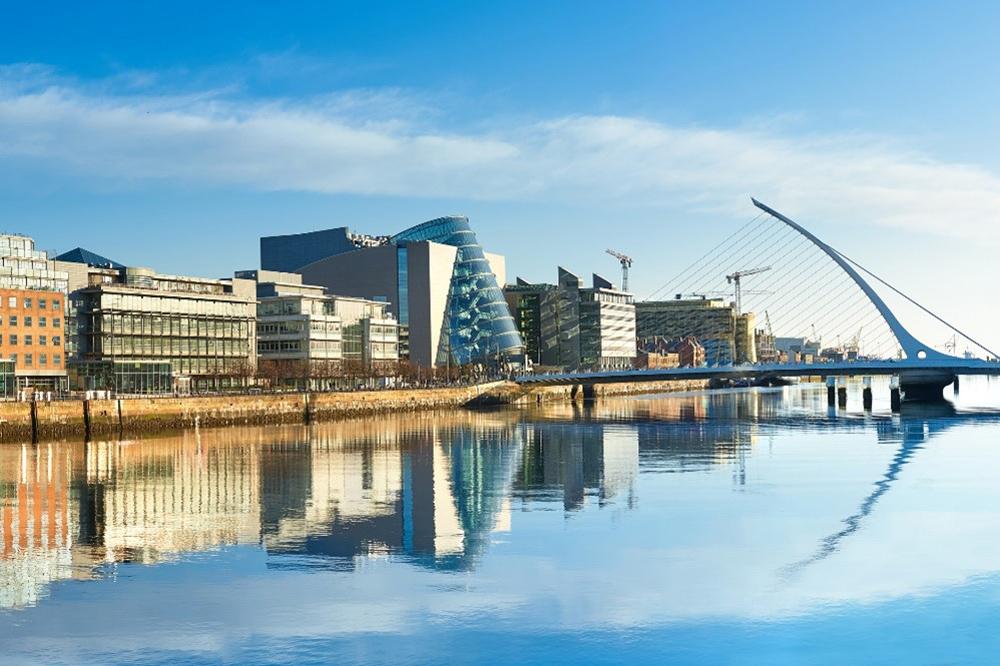
Ireland’s capital was the site of some incredible fire-sale deals in the wake of the global financial crisis.
In 2013 the trigger event in Spain was similar to Ireland—fire-sale auctions held by the country’s newly created bad bank, SAREB.
Like Ireland, Spain has been slammed by the global financial crisis. In 2013, banks started selling condos for as much as 80% off right across the country.
I brought members the chance to buy in a fire-sale deal in the pretty marina town of La Duquesa on the Costa del Sol in 2013. RETA members could buy from €86,900. In 2021, one of these condos sold at €189,000. That’s a gain of €102,100.
If you bought with an 80% mortgage you are talking almost six times your money or more.
As these deals in Ireland and Spain demonstrate, buying at the right moment in a crisis can be an incredible opportunity. This is why I’m constantly monitoring crisis markets, to determine if a trigger moment is close.
And that’s why I’ve kept Venezuela on my radar for so many years.