Warm Pacific water rolls onto a 2.5-mile beach.
Palm trees lean toward the ocean as surfers carve through warm-water waves.
Cafés fill with remote workers lingering over rich Costa Rican coffee after morning surf sessions. Families wander the shoreline beneath blazing Pacific sunsets.
This is Jacó, a beach town on Costa Rica’s central Pacific coast, around 90 minutes from San José and the country’s main international airport.
For decades, Jacó was known primarily as a surf town. Popular with backpackers, adventure travelers, and weekend surfers escaping the capital.
Today, Jacó is evolving into one of Costa Rica’s most dynamic Pacific lifestyle destinations.
And right now, it’s at an inflection point—just as I’m about to bring members of my Real Estate Trend Alert (RETA) group an exclusive off-market opportunity on true beachfront here. (More on that in a moment.)
First, why Jacó’s transformation is steadily moving this once-laidback surf town upmarket.
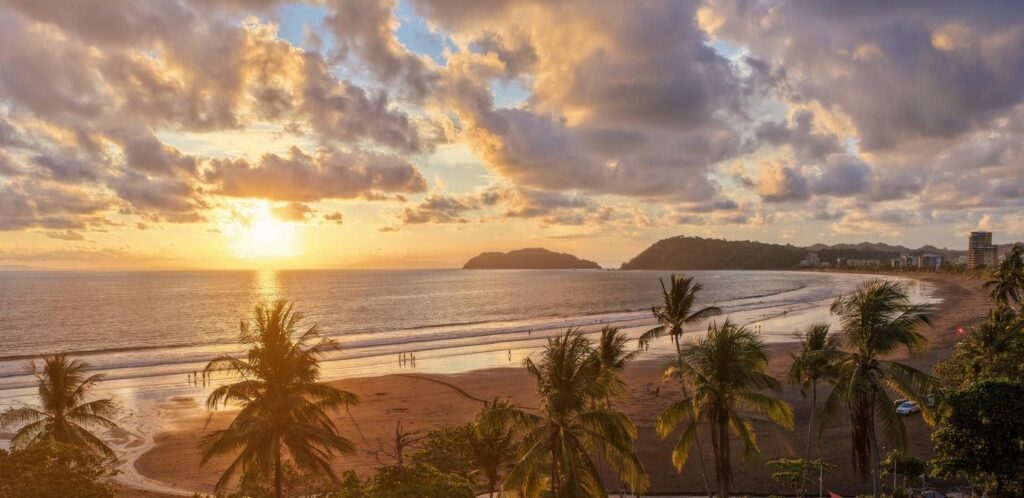
Sunsets draw folks from all around to the beach. It’s like a village square with families and friends. Of course, if you live on the beach, you won’t even have to leave your condo for this.
From Surf Town to Lifestyle Destination
Sixty years ago, Jaco wasn’t a town. The district was formally created in 1965 with fewer than three thousand inhabitants—fishing families, subsistence farmers, cattle workers. The road that connects it to the south didn’t even open until 1978.
The first wave of outsiders arrived not for the beach but for the wave.
Back in the 1960s and ’70s, surfing was going global. A new generation of adventurers took to the waves and went looking overseas for consistent swells and warm-water breaks.
One of the places they found was Jaco.
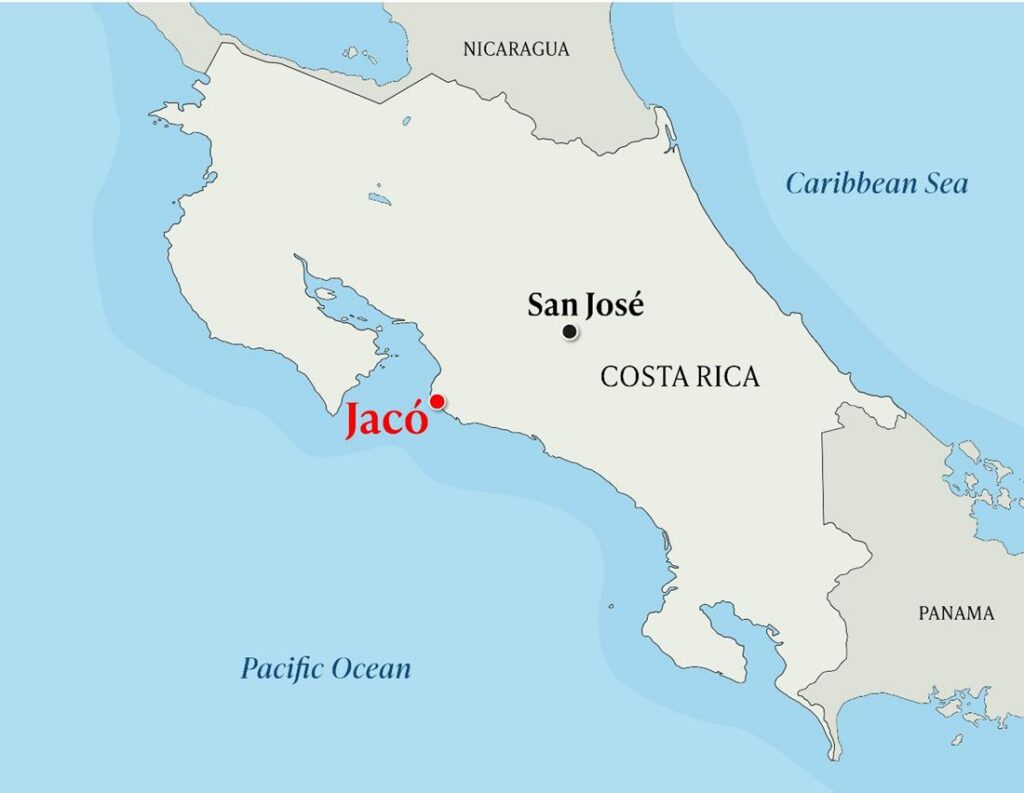
Jacó is just 1.5 hours from San José’s Juan Santamaría International (SJO) airport via the Route 27 toll highway. Ticos, as locals are known, have been driving down on Friday afternoons for more than 30 years.
Back then it was little more than a fishing village wrapped in jungle. Infrastructure was basic. But Jaco had a glorious two-and-a-half-mile beach with incredible surf. And the early surfers were happy to put up with the rough edges to get to it. They became the foundation of Jacó’s first tourism economy.
By the 1980s, with Costa Rica marketing itself internationally as an eco-destination, Jaco was ready to break out. Backpackers arrived. Adventure travelers followed. Families. The town filled with small hotels, restaurants, bars, and tour operators. Jaco evolved into Costa Rica’s original Pacific beach tourism hub.
Through the 1990s, the tourism offering diversified. And by the early 2000s, the next phase began…
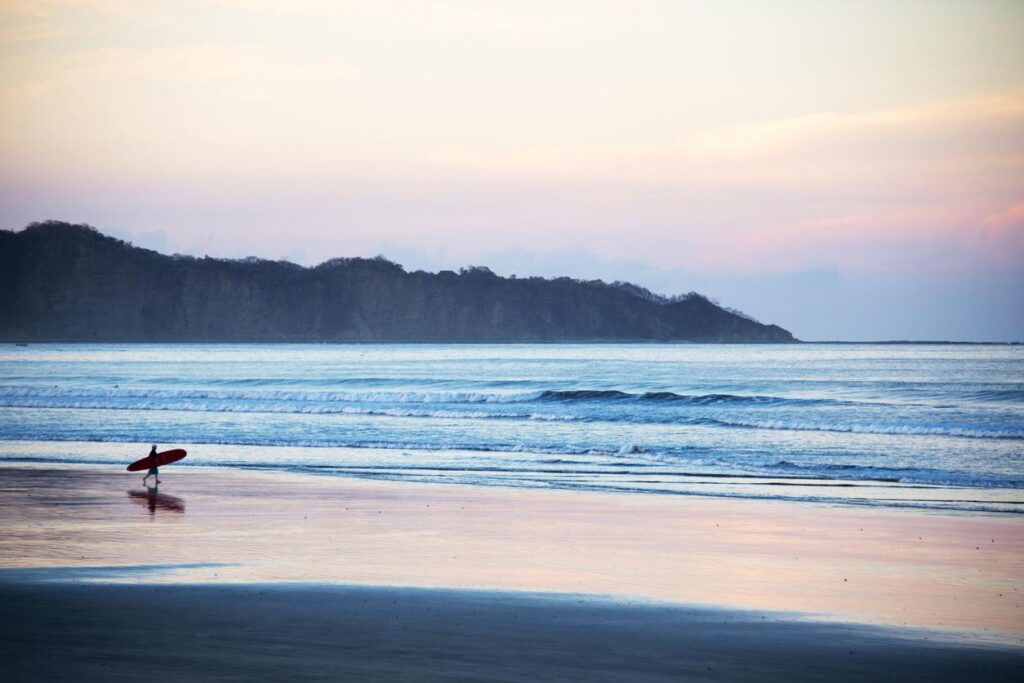
The surfers discovered this coast first, in the 1960s and ’70s. Then came the sportfishers. Then the roads improved, the airport grew, and the world followed.
Luxury Comes to This Coast
In the early 1990s, American developer and sportfisherman Bill Royster arrived on Costa Rica’s central Pacific coast and saw enormous potential where others saw undeveloped cattle land.
He acquired a large coastal property in Herradura Bay, just north of Jacó, and spent years planning what would become Los Sueños Resort & Marina.
The project transformed the area.
By the early 2000s, Los Sueños had introduced a world-class marina, championship golf course, luxury villas, and Marriott-branded hospitality to the coast, helping establish the region as an upscale destination for wealthy anglers, second-home owners, retirees, and international tourists.
Today Los Sueños is the preeminent symbol of luxury on Costa Rica’s central Pacific. It’s polished. Manicured. The kind of resort destination where you know what’s on the menu before you look at it. Many affluent buyers want exactly that and Los Sueños serves them perfectly.
But now many affluent people want to vacation independently. Or stay longer and be in a community. A place with schools, families, stores, restaurants that emerged naturally. A place where Friday night is dinner at a local restaurant and Sunday morning is breakfast tacos and surfers walking back from dawn patrol.
Jaco offers this. And now it’s at an inflection point.
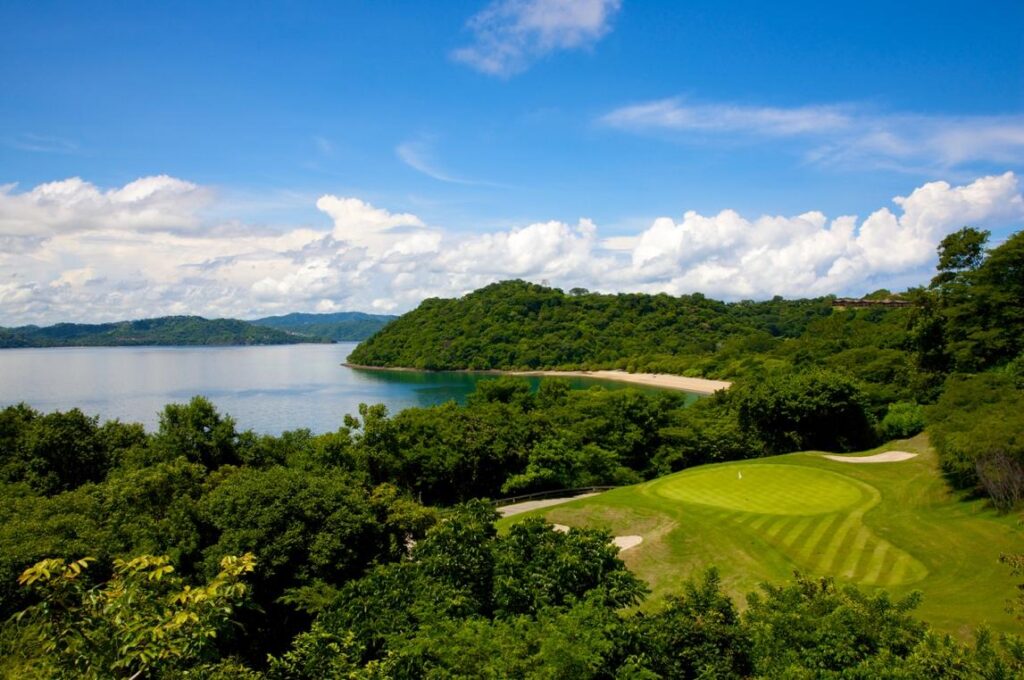
The championship course at Los Sueños—La Iguana, designed by Ted Robinson Jr. Carved through rainforest, set against the Pacific.
The Upmarket Version of Jacó
Already, Jaco has five private bilingual schools. An established expat community. Great gyms. Art galleries. Farmers’ markets.
Around 100 restaurants and bars. A pizza place run by a guy from Rome. A bakery with great coffee run by a French woman. A Thai restaurant operated by a Thai-German couple—my scout Ciaran Madden who lived in Asia for over a decade says he had one of his favorite Thai meals here.
In 1973 the district had under 3,000 people. By 2000 it had 6,371. The 2011 census counted 11,685. The 2022 count was 16,830.
Somewhere along the way, Jacó stopped being just a surf town and became a real community.
At the north end of Jaco’s central corridor—an area locals have started calling “North Jaco”—new higher-end development is starting to cluster.
My scout Ciaran recently had boots on the ground there and described boutique retail spaces, trendy restaurants, upgraded beachfront hospitality, and new amenity-rich residential projects all taking shape within a few blocks. One of the last true beachfront parcels in the area is expected to become a high-end hotel and retail plaza developed by a major regional group.
Taken individually, these are relatively small changes. But together they point toward something bigger.

The town of Jaco is gentrifying, maturing, and the signs are there that this is the moment to get in ahead of what’s coming.
Why This Matters for Real Estate
Jacó now has international tourism, affluent domestic demand, expats, remote workers, retirees, and increasingly sophisticated infrastructure supporting long-term growth.
And it has the culture—surf, walkability, community, real food, real neighborhoods. The thing Los Sueños can’t manufacture.
The market is now ready for what it hasn’t yet had: best-in-class titled beachfront real estate that matches the new buyer’s expectations.
That’s exactly what I’m about to bring RETA members with an exclusive off-market opportunity on true beachfront in Jacó.
It’s a chance to own frontline beach real estate on the closest beach to the country’s main international airport from RETA-only pricing from $297,000 for a two-bed condo.
Ocean views. Modern amenities. Walk-out-to-the-sand beachfront.
This Friday at 1 p.m. ET I’m sending members my full deal briefing on this opportunity. RETA members, stay tuned to your alerts.
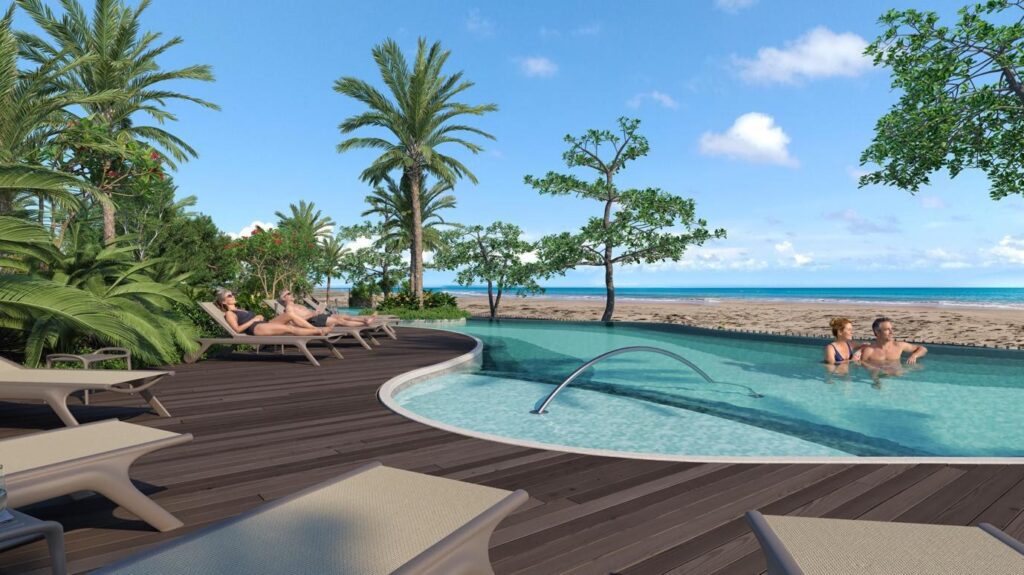
The amenities area is what separates the RETA opportunity from the beach. This is where members will have their pool, firepits, barbecue area, garden yoga room, and more besides. There is also a gym, a co-work, a lounge…all true beachfront. (Renders should not be considered final, but give us a great idea what to expect.)
Wishing you good real estate investing,

P.S. In all the years I’ve been operating in Costa Rica, scouting markets and bringing deals to RETA members, this is the first time RETA members have ever had access to a true beachfront condo here.
Not “near the beach.” Not “across a road.” Not “with ocean views.” True beachfront. Walk-out-the-door, onto-the-sand beachfront. The kind of asset that—across the wider Caribbean, the Mediterranean, Hawaii, and the Pacific coast of North America—trades at multi-million-dollar entry points and almost never becomes available off-market…