Costa Rica is a stunning natural paradise…
A tourism juggernaut…
A playground of celebrities and billionaires…
And one of the best places to retire on the planet.
It’s also the site of an incredible, upcoming deal I’m about to bring to members of my Real Estate Trend Alert (RETA) group, where members will soon have a chance to lock in what I believe will be gains of over $223,000 just five years after delivery on true beachfront condos on the closest stunning beach to Costa Rica’s biggest international airport and the capital San José.
Costa Rica’s transformation from little-known country to world-renowned destination took many decades of thoughtful planning and careful development…
This journey spotlights why Costa Rica is such a special place…and why this spectacular country is about to hit a whole new level…
Here is that journey, in photos…
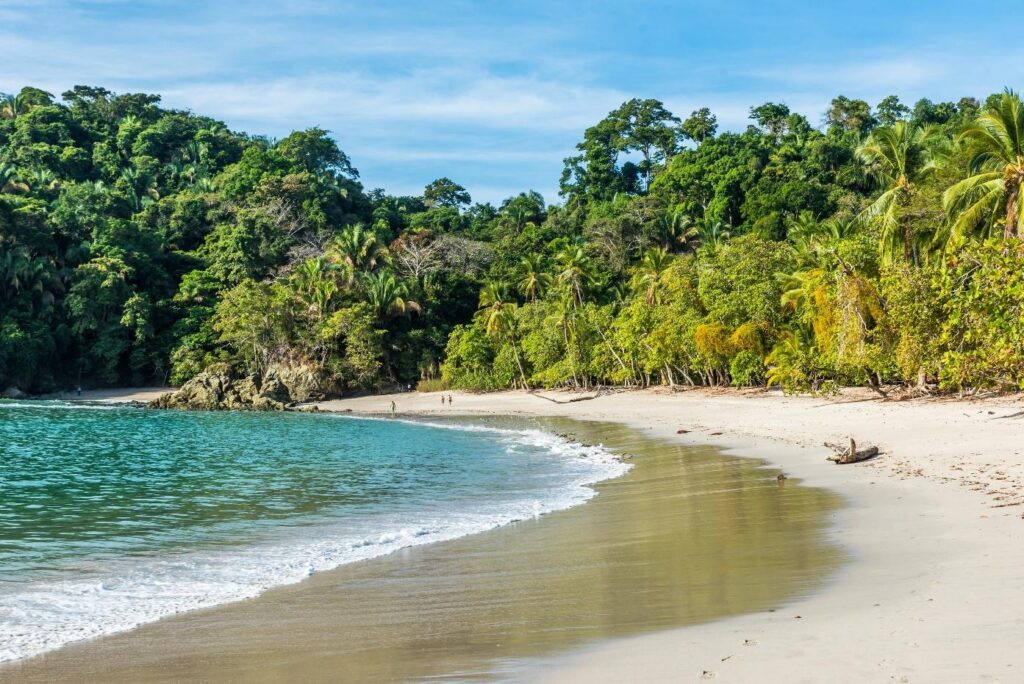
Costa Rica is a land of rolling, jungle-clad hills and beautiful, soft-sand beaches. This stunning natural beauty has turned it into a hugely popular destination for tourists and expats.
Timeline of Costa Rica’s Phenomenal Rise
The first European-style hotel in Costa Rica was the Gran Hotel.
Opened in 1930 in Costa Rica’s capital, San José, it was built to attract overseas guests and marked the birth of the international tourism industry in the country. The Gran Hotel is still in operation today and is now part of the Hilton group.
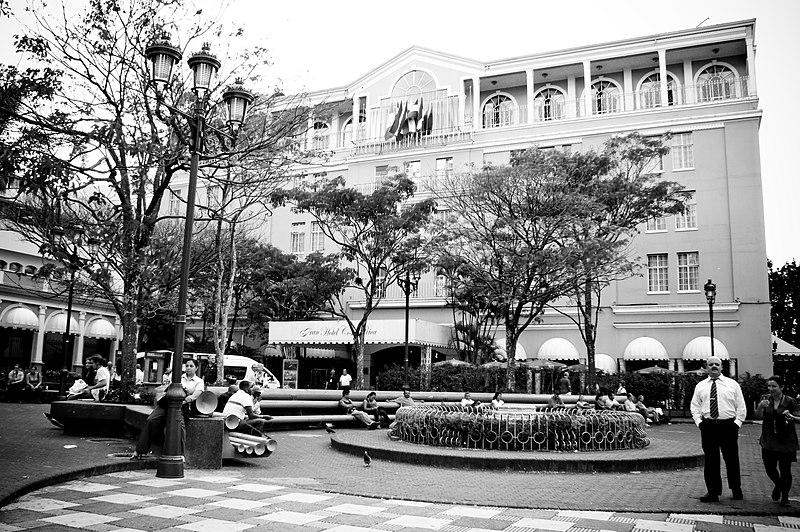
John F. Kennedy stayed in the Gran Hotel in 1963. He was the first U.S. president to visit Costa Rica. The hotel’s presidential suite, which costs $900 per night, is named for him.
Costa Rica was quick to understand the vast potential of international tourism.
Costa Rica’s National Tourism Board was created in June 1931 and over the following decades, it launched a number of tourism campaigns to build awareness of the country overseas.
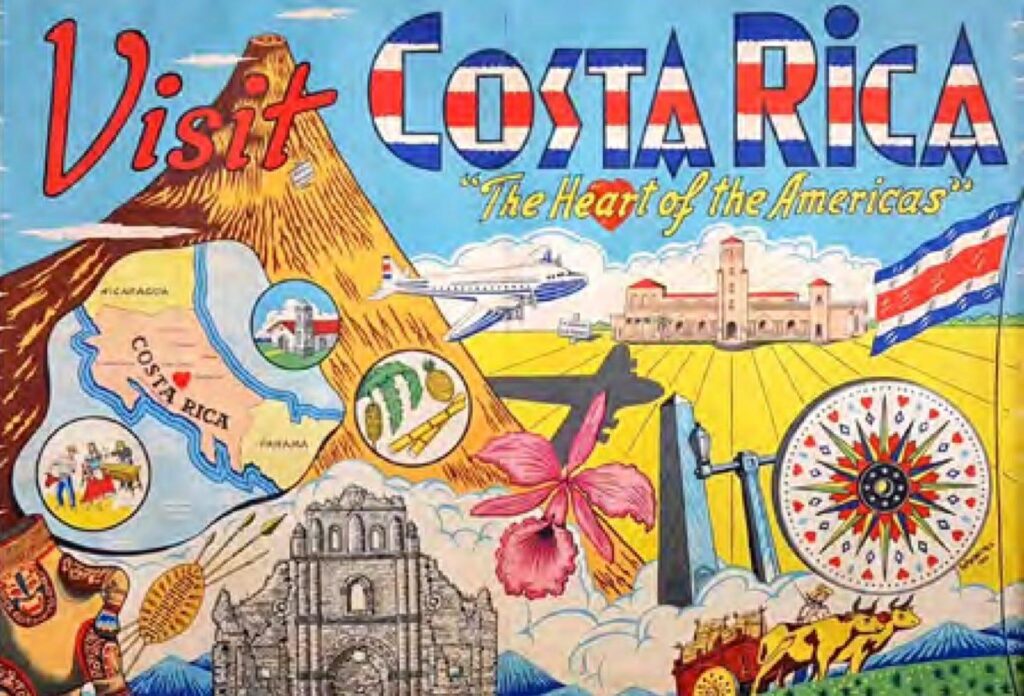
This ad from the 1950s positioned Costa Rica as “The Heart of the Americas.”
In 1956, a Mexican film called Pura Vida was released. It had a big cultural impact in Costa Rica. Pura Vida translates directly to “Pure Life.” But really it means something more like “Life is Good.”
This idea of embracing the good life took root in Costa Rica.
Today, Pura Vida is the national motto…a phrase you’ll hear regularly and which embodies the laidback, healthy, fun-loving way of life in the country.
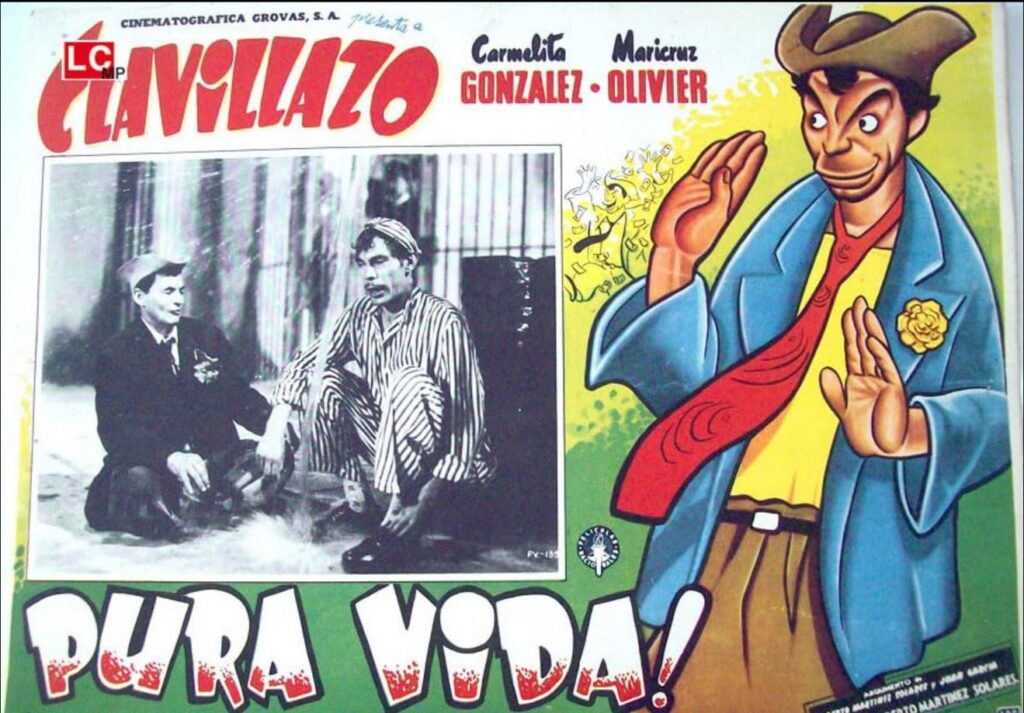
Costa Rica’s national motto, Pura Vida, comes from a 1950s Mexican movie.
Costa Rica’s early tourism efforts had some moderate success…but things really kicked into high gear in the 1980s. That’s when Costa Rica started focusing its marketing efforts on the country’s outstanding natural beauty.
Campaigns with slogans like “Costa Rica, it’s only natural” opened up a tourism goldmine.
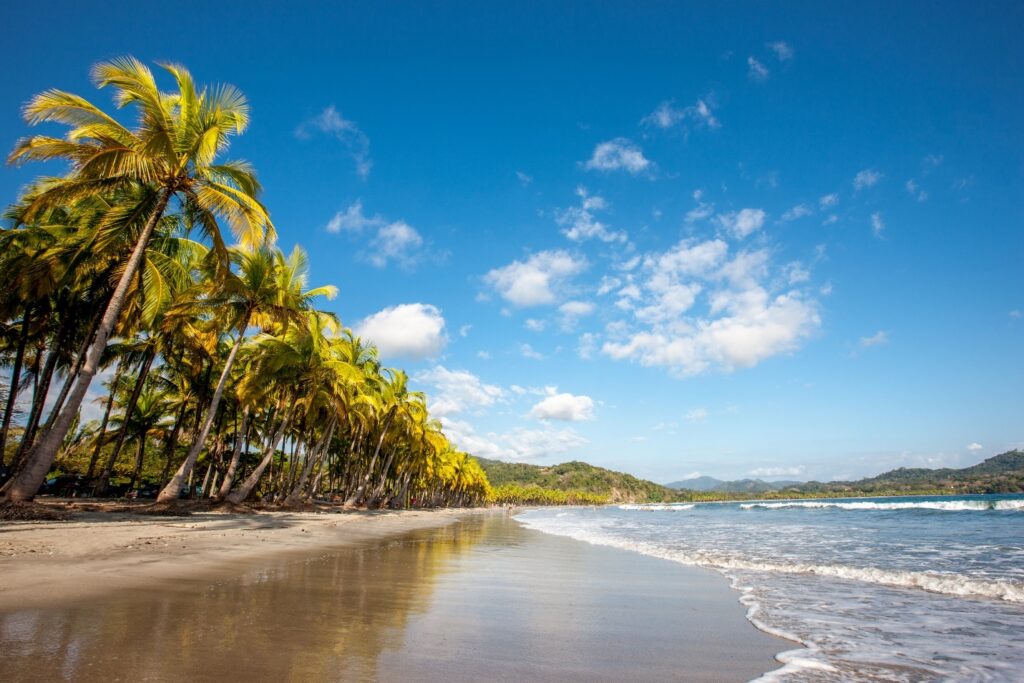
Millions of people come to Costa Rica every year to explore its natural splendor.
Costa Rica is the most-visited country in Central America for foreign tourism. 2.94 million foreign visitors in 2024. A genuine global tourism heavyweight. And there are growing year-round communities in parallel to that tourist surge: remote-working professionals, their families, retirees on residency programs, snowbirds, digital nomads…
Importantly, people have been staying longer and longer, due to things like the work-from-anywhere trend.
People also started visiting in bigger numbers to explore the incredible jungles and wildlife.
The country is now famous for “eco-adventures” like hiking, nature walks, ziplining, snorkeling, and scuba diving.
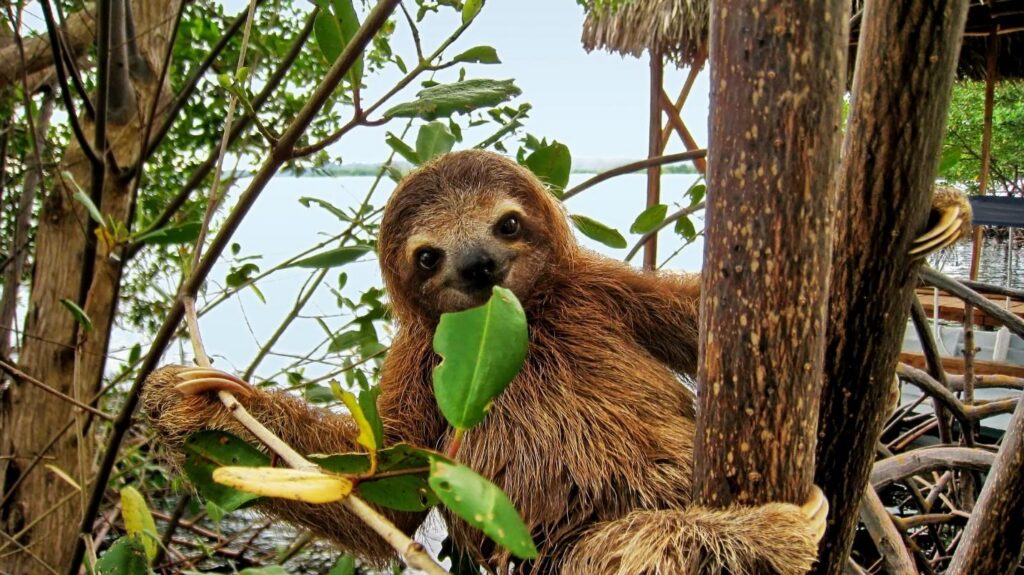
Costa Rica is one of the most biodiverse places in the world…home to sloths, monkey, toucans, parrots, and scores of other colorful creatures.
Word spread of Costa Rica’s Pura Vida atmosphere and its welcoming, friendly people. The country is one of the happiest places in the world, consistently placing in the top five of the Happy Planet Index.
Factors like this cemented its international appeal.
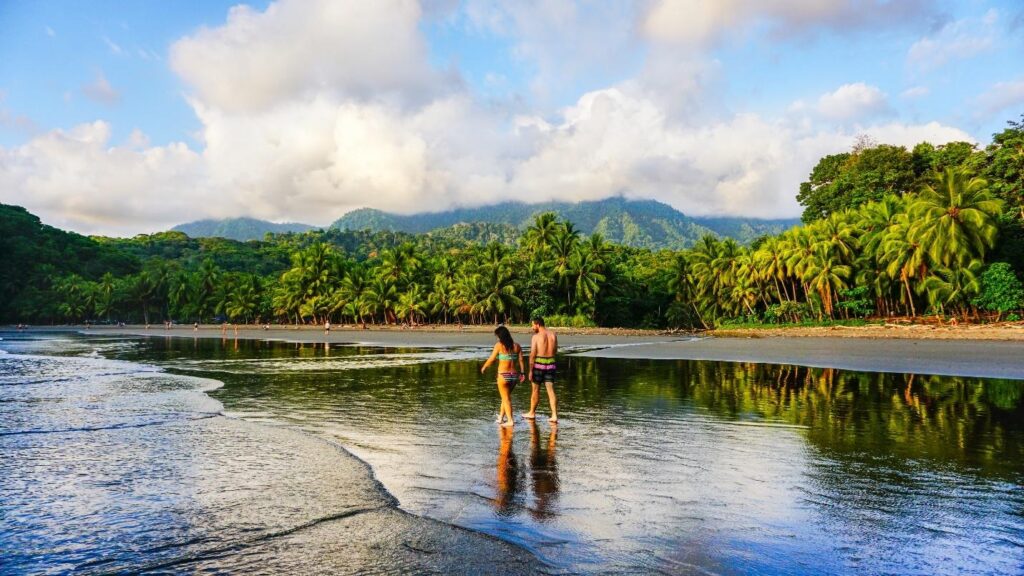
Costa Ricans are among the world’s happiest people. It’s not hard to understand why…
That broader transformation is still unfolding today—only now it’s increasingly obvious in specific pockets of Costa Rica’s coastline where accessibility, lifestyle appeal, and beachfront scarcity are colliding.
One place where I see this most clearly is the central Pacific coast town of Jacó.
The Jaco story is one of the cleanest evolution arcs you’ll find anywhere on the Pacific coast.
Sixty years ago, Jaco wasn’t a town. The district was formally created in 1965 with fewer than three thousand inhabitants—fishing families, subsistence farmers, cattle workers. The road that connects it to the south didn’t even open until 1978.
The first wave of outsiders arrived not for the beach but for the wave.
Back in the 1960s and ’70s, surfing was going global. Lighter, cheaper boards. The Endless Summer on cinema screens. The Beach Boys on the radio. A new generation of adventurers took to the waves and went looking overseas for consistent swells and warm-water breaks.
One of the places they found was Jaco.
Back then it was little more than a fishing village wrapped in jungle. Roads from the capital were poor. Infrastructure was basic. But Jaco had a glorious two-and-a-half-mile beach with incredible surf. And the early surfers were happy to put up with the rough edges to get to it.
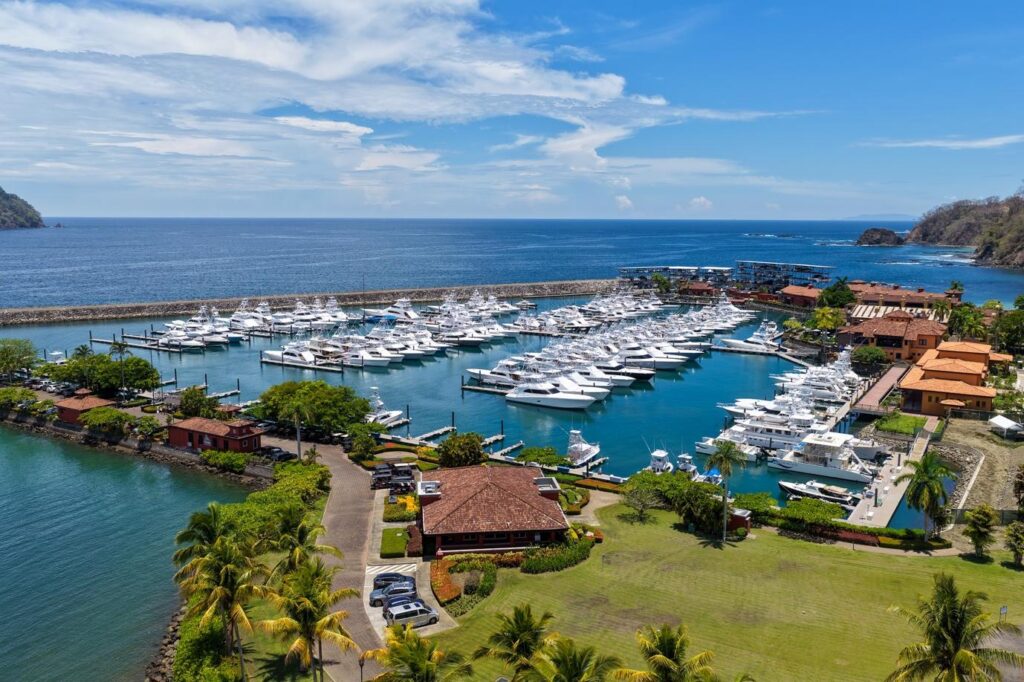
Los Sueños Marina. A Californian developer landed here in 1991, looked at a cattle farm, and envisioned a championship golf course, a 200-slip marina, and Marriott-flagged hospitality. He was right. The result is the preeminent symbol of luxury on Costa Rica’s central Pacific—and proof of what this coast attracts.
Those first arrivals became the foundation. They rented simple rooms. Opened surf camps. Started beach bars and cafés. Local families adapted. Guesthouses appeared. Board rentals. Small restaurants. A grassroots tourism economy emerged organically around the beach and the surf culture.
By the 1980s, with Costa Rica marketing itself internationally as an eco-destination, Jaco was ready to break out. Backpackers arrived. Adventure travelers followed. Families. The town filled with small hotels, restaurants, bars, and tour operators. Jaco evolved into Costa Rica’s original Pacific beach tourism hub.
Through the 1990s, the tourism offering diversified. National park tours. Zipline and ATV excursions. Wellness retreats. Sportfishing charters. Beach clubs.
By the early 2000s, the next phase began…
In 1991 a developer and sportfisherman named Bill Royster had dropped anchor in Herradura Bay, 15 minutes north of Jaco. He was on what was supposed to be a six-month sabbatical along the Pacific coast. He stayed 30 years.
What Royster saw in that bay was a 1,100-acre cattle farm with free-roaming horses and a few hundred head of cattle, set inside a bowl of green hills with a natural anchorage and sheltered water.
Where everyone else saw pasture, he saw a master-planned resort.
Construction broke ground in 1997. The Marriott-flagged hotel and the 6,700-yard championship golf course opened in 2000. President Miguel Ángel Rodríguez personally laid the cornerstone of the marina, which opened to the public in 2001 with 200 wet slips. Within a few years, Los Sueños was one of Latin America’s premier billfish and sportfishing hubs.
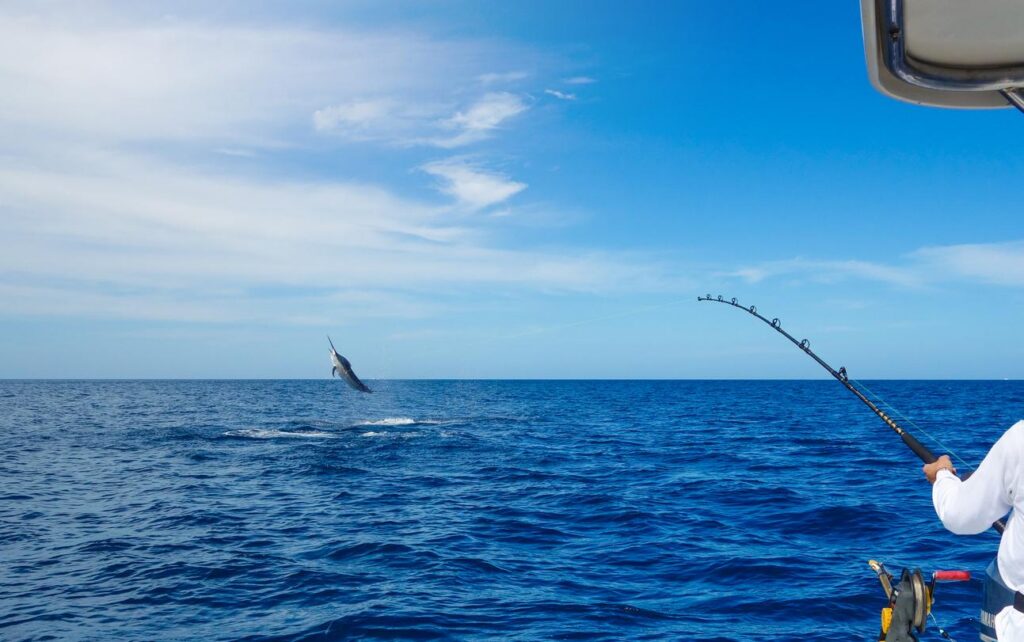
Los Sueños Marina is one of Latin America’s premier billfish and sailfish hubs—Michael Jordan, Tom Brady, and a regular roster of Hollywood and Wall Street names run boats from these slips. Ocean-view condos in the resort start in the $700,000s. Villas list from $3 million to $6.5 million.
Suddenly this coast wasn’t attracting just surfers and backpackers anymore. It was attracting wealthy anglers, second-home owners, retirees, and upscale tourists with a world-class marina, sportfishing fleet, championship golf, luxury villas, and Marriott-branded hospitality.
Today Los Sueños is the preeminent symbol of luxury on Costa Rica’s central Pacific. Ocean-view condos start in the $700,000s. Villas regularly list for $3 million, $5 million, and more. A five-bed villa is on the market right now for $6.5 million. Michael Jordan is a regular visitor.
But now many affluent people want to vacation independently. Or stay longer and be in a community. A place with schools, families, stores, restaurants that emerged naturally. A place where Friday night is dinner at a local restaurant and Sunday morning is breakfast tacos and surfers walking back from dawn patrol.
Jaco offers this. And right now, the upmarket version of it is just starting to arrive.
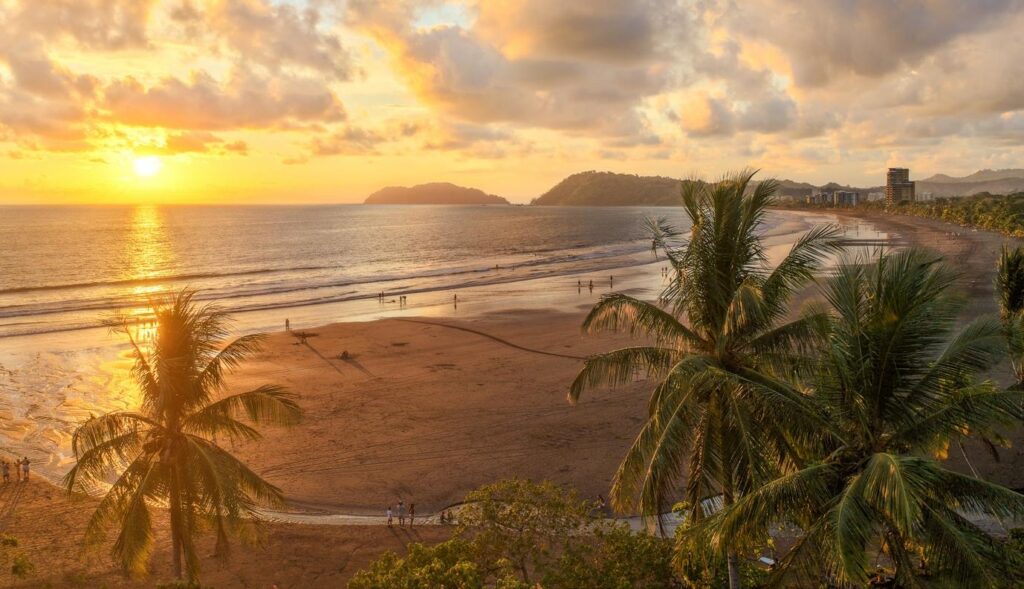
Jacó always had a stunning beach and now it can be easily reached from the country’s capital.
Today, Jaco is moving upmarket.
But there are only maybe five or six buildings in all of Jaco that qualify as “modern, well-amenitized, beachfront condo towers.”
One example is Pacific Point, a modern 8-story glass tower, offering upscale amenities and two-bed condos from over $500,000—even though residents still have to cross a road to reach the beach.
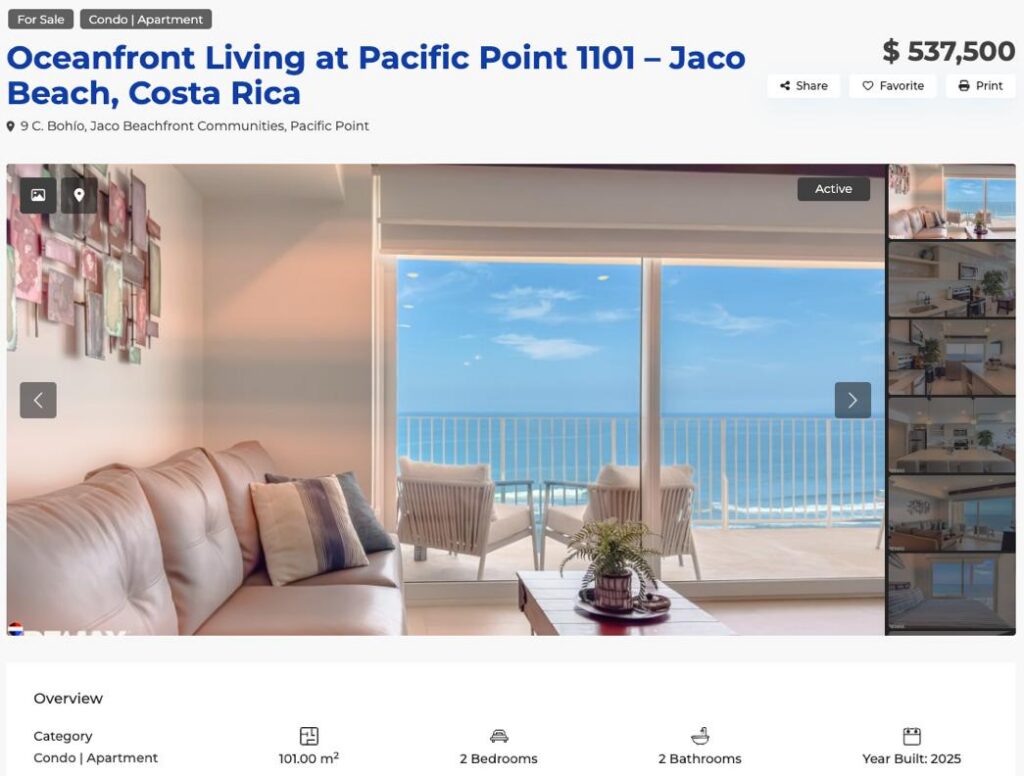
A two-bed condo for sale in Pacific Point for $537,000.
But I’m about to bring my Real Estate Trend Alert (RETA) group a new off-market deal here, and the exclusive RETA-only price is from just $297,000!
I expect gains of $223,000 five years after delivery and gross yields of 17% renting short term.
If you’re a RETA member, stay tuned for more details of this rare beachfront opportunity…
Wishing you good real estate investing,

P.S. RETA deals in Costa Rica are rare. But when I’ve gotten them, the uplifts have typically been incredible…
- $118,200 More—I bought myself in the Acquarello Flamingo deal in March 2024. It’s close to the beach in Playa Flamingo. The RETA-only pricing was from just $286,800 for a two-bed home and from just $386,800 for a three-bed home. Now, retail pricing is $405,000 for a two bed and $505,000 for a three bed. Those are uplifts of $118,200.
- Uplift of $149,000—In Costa Rica’s Southern Zone I brought members a deal called Villas Vista de la Montaña. The RETA pricing for premium three-bed homes was $250,000. In mid-2025, one of these premium three beds was listed for $399,000—an uplift of $149,000.
- Boost of $170,600—Another RETA-only deal was in Azul Paraiso—a private, secluded community with stunning panoramic views out over the Pacific and the iconic Peninsula Papagayo. A recent price list from the developer shows that the condos RETA members could buy for $268,400 are now listing for $439,000—that’s $170,600 more.
Stay tuned. More on the new deal soon…