The world is running into a food constraint.
More people and rising incomes mean greater demand for meat, dairy, and protein.
Yet there’s less arable land per person…and increasing pressure on water.
In a world like that, scalable, well-watered, politically stable agricultural lands are strategically valuable on a scale that most investors haven’t processed yet.
Paraguay has just such land…
Yesterday I explained how this small nation is becoming an energy superpower. Today, let me show you another important reason I’m so bullish on it…
Food, the land to grow it, the water to feed it, and the ability to export it. Paraguay has what the world is going to need more desperately than anything else over the next 25 years.
Why Paraguay Can Feed the World
Paraguay is already feeding a large part of the world.
It’s the world’s fourth-largest soybean exporter, behind only Brazil, the US, and Argentina. It is a top-10 global beef exporter. Its cattle herd is around 14 to 15 million head—roughly double the human population of the country.
Agricultural exports grew over 28% in 2024. Pork, beef, poultry, and dairy are all up double-digits as the sector diversifies well beyond soy. Emerging “superfood” exports like chia and sesame are scaling fast.
Paraguay’s farmland is not just abundant; it is productive.
Eastern Paraguay sits on similar soils that powered Brazil’s Cerrado agricultural miracle over the past 30 years. Commercial farms there routinely double-crop soy and corn off the same field in a single year. Cereal yields run above the world average.
Production costs run 10 to 20% lower than Brazil or Argentina on comparable land, mainly because of cheaper land prices and a simpler tax structure.
Agricultural land in Paraguay’s eastern region trades at $3,000 to $7,000 per hectare — versus $10,000 to $20,000 for comparable land in southern Brazil or the Midwest.
Translation: every dollar of global food demand that lands in Paraguay earns more margin than the same dollar lands anywhere else on the continent.
And Paraguay has something else the world is running short of…water.
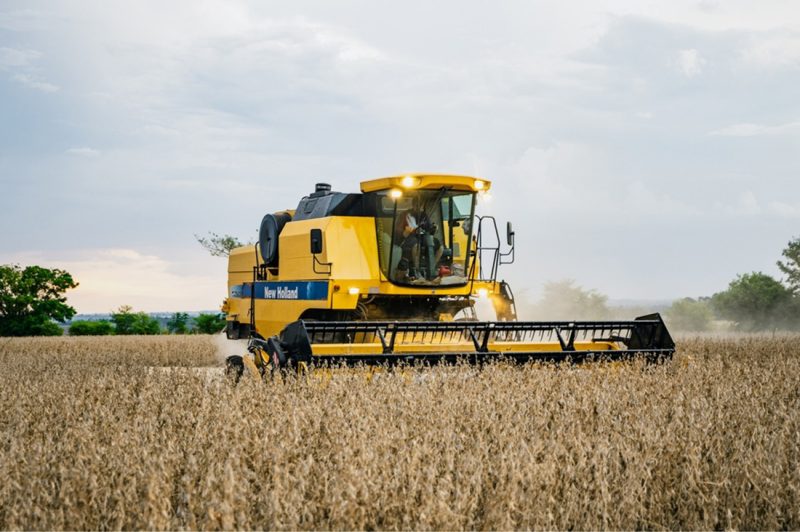
Around a fifth of Paraguay’s land sits atop one of the largest freshwater reserves on earth, the Guaraní aquifer, and serious farmland investors say the country could triple its food output thanks to fertile arable land.
Paraguay’s Huge Water Advantage
Water is not an abstract advantage. In the world that is coming, it is the single most binding constraint on where food can actually be grown. While other great breadbaskets ration water and drain their aquifers, Paraguay has not yet had to make a single tough decision.
At a water-stress ratio below 5% — compared with over 80% in North Africa and similar numbers in the worst U.S. and Indian basins — Paraguay is barely using what it has. Rainfall in the main soy belt runs 1,200 to 1,800 mm a year, high by global standards.
And beneath a fifth of its territory sits the Guaraní Aquifer—one of the largest freshwater reserves on Earth, estimated at 30,000 to 40,000 cubic kilometers.
Enough fresh drinking water to supply the entire global population for more than 200 years.
Most of the world’s major food exporters have already spent their water cushion. Paraguay has barely started using its.
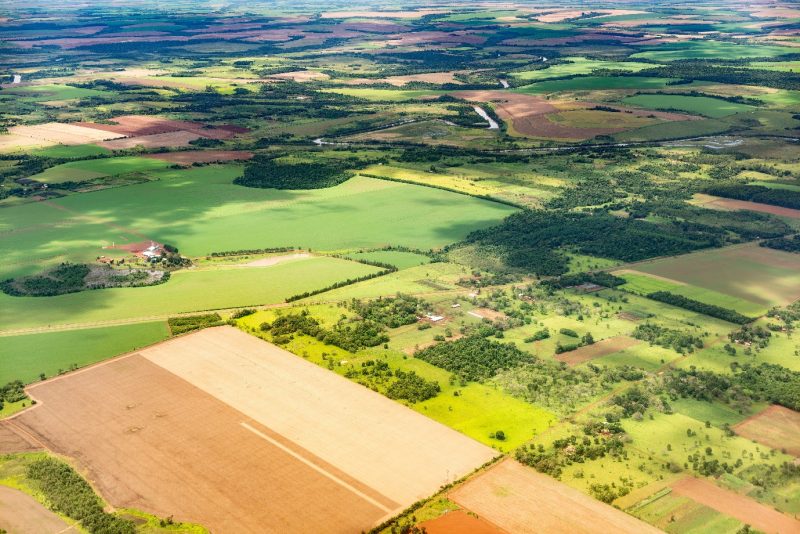
Paraguay is blessed with fertile farmland and strong food security—advantages that are becoming more valuable by the year.
A Bigger Export Machine is Coming
Food products make up roughly 70% of Paraguay’s total exports—one of the highest ratios in the world for a country of any meaningful size.
This is not a country that happens to have some agriculture. It is a country whose external economy is already built on feeding the world, at a scale that punches well above its population of 7.5 million.
And Paraguay is about to get significantly more powerful as a food exporter, on two fronts at once.
TheBi-Oceanic Corridor—a 2,300-mile paved route under construction connecting Brazil’s Atlantic ports to Chile’s Pacific ports through Paraguay—is expected to cut transport costs for every Paraguayan exporter using the route by around 30%. That is a permanent structural uplift on every ton of soy, beef, poultry, or chia that leaves the country.
And the EU-Mercosur trade deal—the largest ever agreed by the EU, signed in December 2024 and moving through ratification—will substantially open European markets to Paraguayan agricultural exports just as the corridor comes online.
This is a country set to become one of the most strategically important food-and-water economies on Earth over the next two decades.
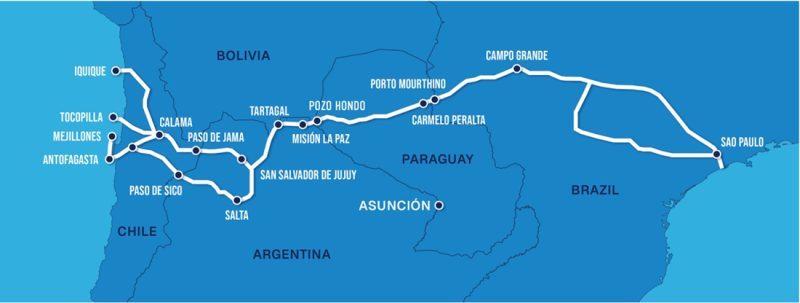
The Bi-oceanic Corridor is set to link ports in Chile with those in Brazil, using Paraguay as a pivot and opening the country up to massively improve transport of food and commodities.
Where the Wealth Will Flow
This is where the story gets interesting…
The capital is already following. Listed Brazilian farmland operator BrasilAgro has built a cross-border portfolio that includes substantial Paraguayan holdings.
Specialist agricultural firms from Brazil, Argentina, and farther afield have been quietly setting up operations. This is the pattern that turned Brazil’s Cerrado into an agricultural superpower over the past 30 years. Paraguay is at an earlier point on that same curve.
Once created, agricultural wealth has a specific pattern of flow.
Landowners and agribusiness executives maintain their headquarters, their banking, their legal counsel, and their personal residences in the capital. They educate their children there. They spend there.
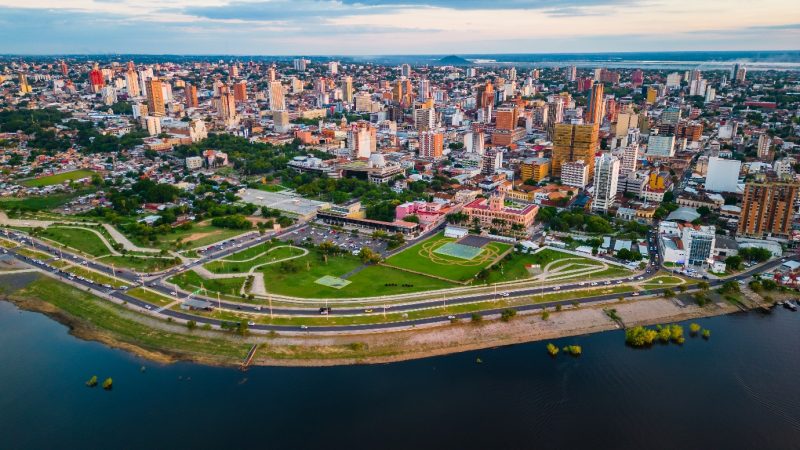
As Paraguay’s food economy expands, that wealth will pool in Asunción the same way Argentine agricultural wealth once pooled in Buenos Aires, and for the same reasons…
That wealth will concentrate on The Golden Mile….right where I’m bringing members of my Real Estate Trend Alert (RETA) group an off-market deal…
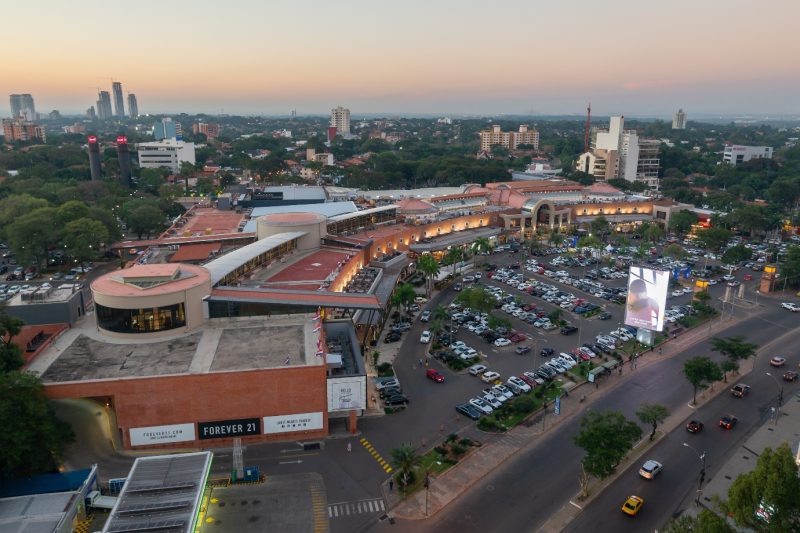
The upcoming RETA-only opportunity is close to Shopping del Sol, at the center of Asunción’s Golden Mile.
In just over 24 hours, this exclusive RETA-only opportunity in the Link Center on Asunción’s Golden Mile will open.
There are one-bed condos of 565 square feet from a RETA-only price of just $114,548.
There are also two-beds starting from $240,076…and stunning spacious three-beds available on the upper floors from just $362,440.
The off-market price rises by floor.
Each condo is priced off-market and RETA only—a truly killer deal. I figure values will rise by 40% to 50% during construction, but that’s not why I’m buying…
I’m buying because I expect values to 3X within a decade, and I can earn income along the way.
The deal opens tomorrow, Wednesday, at 1 p.m. ET.
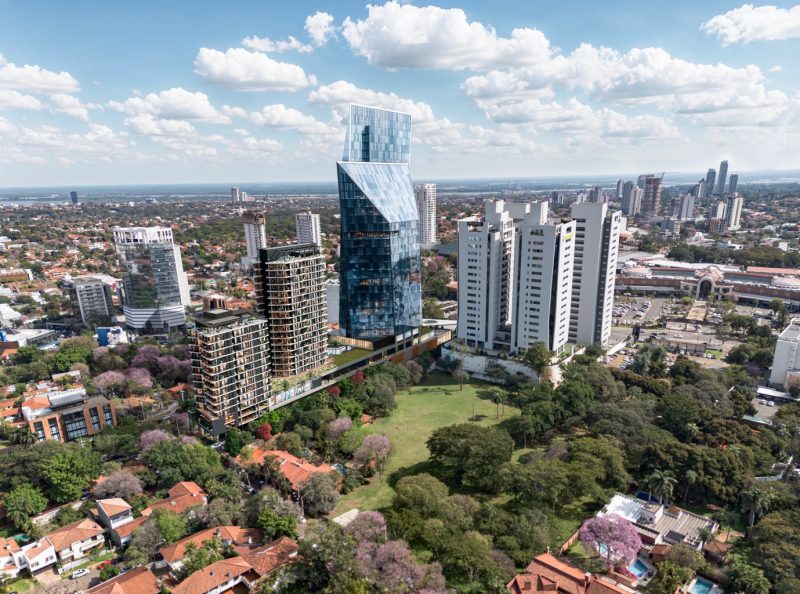
RETA members have the chance to own right next to the World Trade Center on Asunción’s Golden Mile, in a landmark mixed-use development called Link Center. (Renders shouldn’t be considered final but give us a great idea what to expect.)
Wishing you good real estate investing,

P.S. I’m getting in…
And I can’t remember a RETA opportunity where so many people inside my own circle have wanted in. I mean personal contacts…speakers at The Gatherings…seasoned international investors who see opportunities all over the world.
There’s a level of excitement around this deal I haven’t seen in a long time.
It’s the one everyone wants.
And I believe that’s because the story here is so compelling…a fast-growing economy, extraordinary macro tailwinds, and the chance to own prime real estate in what I believe will become the most important address in one of South America’s most overlooked capitals.
A pool, sauna, gym, rooftop terrace, a 24-hour concierge, underground parking—and direct walking access to the World Trade Center and the Golden Mile. This isn’t a wish list. It’s the exact specification an executive tenant, a dollar-earning professional, or an international newcomer will demand before they sign a lease anywhere in Asunción.